Alkanes and Nomenclature
Meet the (Most Important) Functional Groups
Last updated: May 28th, 2026 |
All About Functional Groups
- Functional groups are specific groupings of atoms within molecules that have their own characteristic properties, regardless of the other atoms present in a molecule.
- Common examples of functional groups are alcohols, alkenes, alkynes, amines, carboxylic acids, aldehydes, ketones, esters, and ethers, among others.
- In a typical sophomore organic chemistry course, there are about 15 key functional groups, with another group of 10 or so that make consistent appearances. You’ll meet others, too – this is just a selection of the most common.
Table of Contents
- Functional Groups
- Alkanes, Alkenes, Alkynes, and Aromatic Rings
- Alcohols, Ethers, Amines, Thiols, Alkyl Halides
- Aldehydes, Ketones, Carboxylic Acids, and Esters.
- Amides, Acid Halides, Anhydrides, Nitriles
- Miscellaneous: Epoxides, Thioethers, Nitro, Imine, Azide
- Notes
- Quiz Yourself!
- (Advanced) References and Further Reading
1. Functional Groups
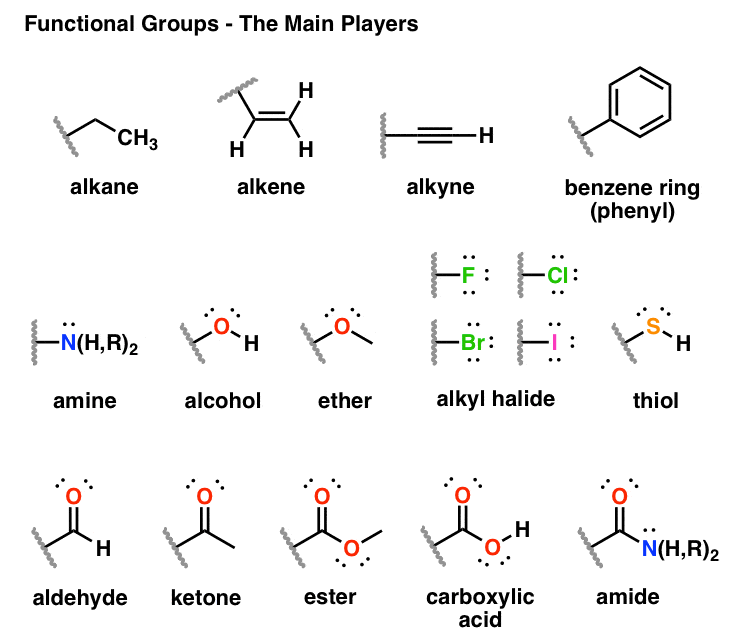
A functional group is what we call specific groupings of certain atoms within molecules that have their own characteristic properties.
Here are some of the most commonly encountered functional groups. Note that “R” is a placeholder for a generic carbon substituent.
A second group of slightly less commonly encountered functional groups are here. This is by no means an exhaustive list, but it’s at least a good start.
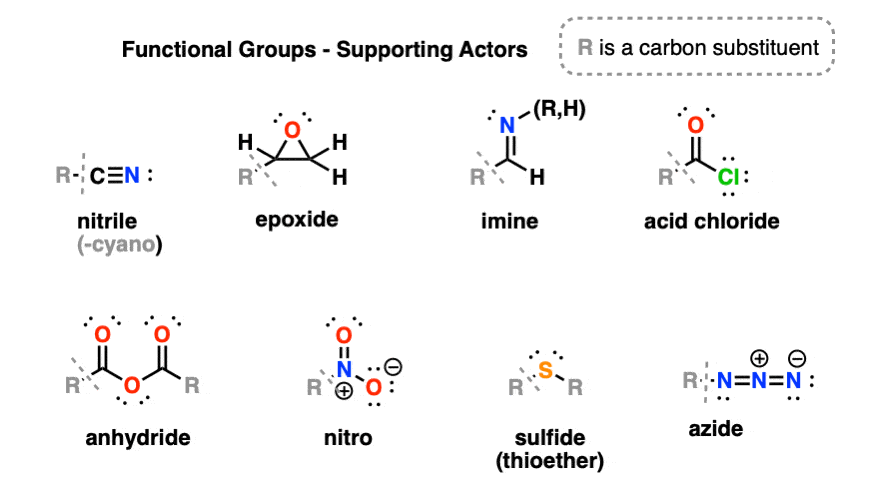
In the beginning of the course, being presented with a list of 20-25 functional groups to remember might seem like a lot. And it probably is!
The good news is that you’ve already learned a lot of functional group names without trying too hard.
Do these names sound familiar?
Propane. Tylenol. Ibuprophen. Testosterone. Dopamine.
Learning functional groups will be a matter of connecting those names to general structures.
Another good way to get to know functional groups is to think about the relative electronegativities of the elements in each group. That will help you understand their properties and help you think about how they behave in chemical reactions.
2. Alkanes, Alkenes, Alkynes, and Aromatic Rings
The hydrocarbon functional groups are very non-polar and tend to be extremely weak acids.
In hydrocarbons, the only types of intermolecular interactions are London dispersion forces and their boiling points tend to be quite low, relative to molecules containing more polar functional groups. (See article: 3 Trends That Affect Boiling Points)
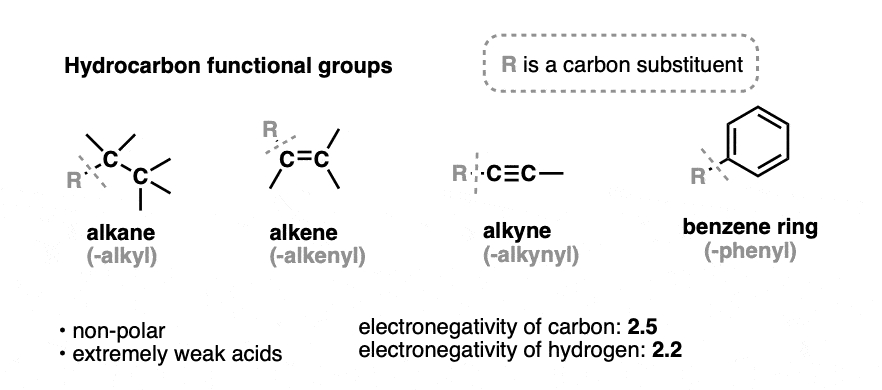
Alkanes are hydrocarbons containing no multiple bonds. Alkane substituents are called alkyl groups, which refers to alkane groups lacking a C-H bond such as methyl, ethyl, or propyl.
- Common examples of alkanes are methane, ethane, propane, butane, and octane.
- The C-H bond is highly covalent and alkanes are very non-polar. They do not mix with water (not “miscible“, in other words)
- Alkyl carbons are sp3 hybridized and have tetrahedral geometry about the carbon.
- You can often think of alkyl groups as the “spectator” functional groups of organic chemistry, abbreviated as R-. With the exceptions of free-radical substitution and, of course, combustion, alkanes don’t undergo a huge number of different reactions. They tend to provide the backbone of most organic molecules.
Alkenes are hydrocarbons with one or more carbon-carbon double bonds.
- Common examples are ethene, propene, and butene.
- Alkene substituents are called alkenyl groups; vinyl is often used to refer to -CH=CH2 .
- Alkenyl carbons are sp2 hybridized, with a trigonal planar geometry.
Alkynes contain a carbon-carbon triple bond.
- Ethyne (acetylene) is the simplest alkyne; alkynes are sometimes called acetylenes.
- Alkyne substituents are called alkynyl groups.
- Terminal alkynes have a C-H. Internal alkynes have C-C bonds at each end.
- Alkynyl carbons are sp hybridized with a linear geometry.
Benzene rings are six-membered rings containing 3 double bonds. Benzene rings are common in nature due to a property called aromaticity (nothing to do with its smell, see article) that make them unusually stable. Can also be drawn as a hexagon with a circle.
- Methylbenzene (toluene) is responsible for the smell of model airplane glue.
- Benzene substituents C6H5– are called phenyl groups.
- The carbons in benzene are sp2 hybridized with trigonal planar geometry.
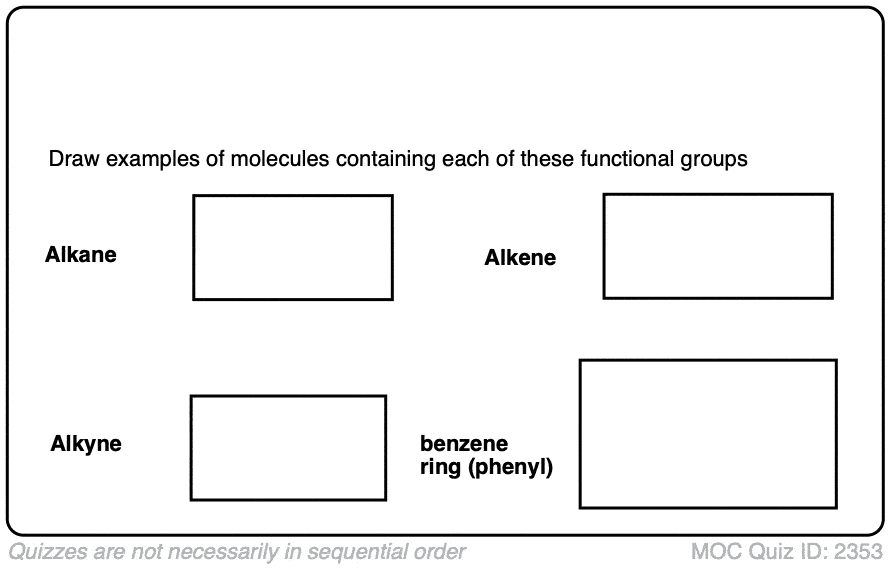
Draw examples of alkanes, alkenes, alkynes, and aromatic rings.
 Click to Flip
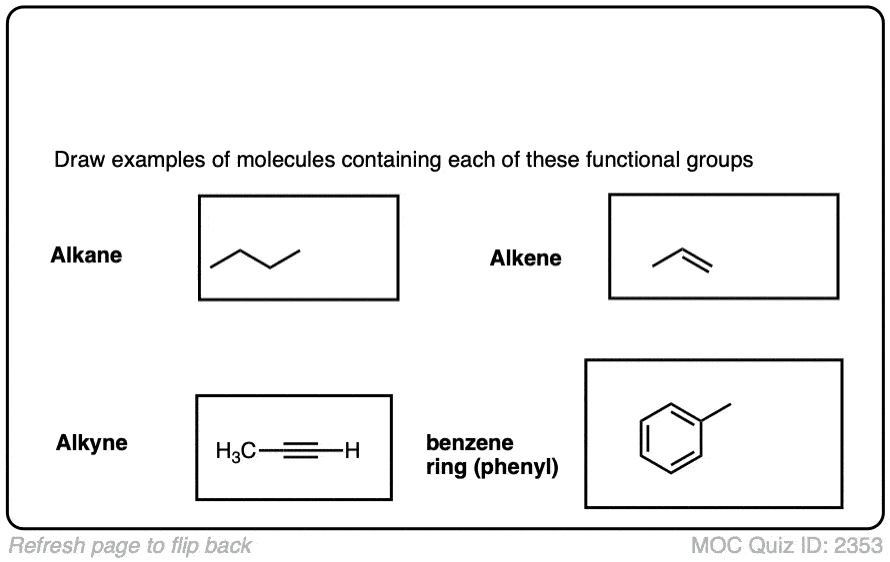
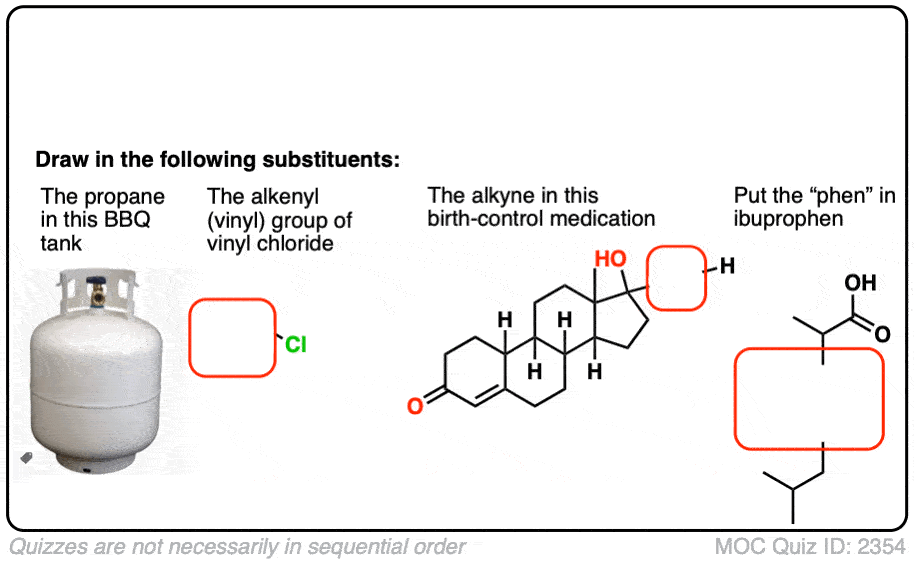
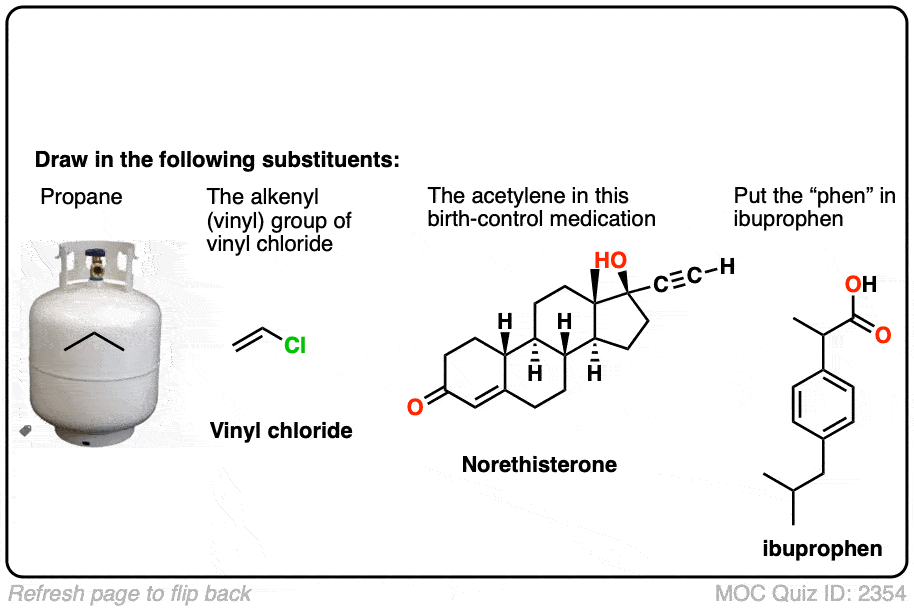
The following molecules lack substituents. Draw them in.
 Click to Flip
Worchestershire
3. Alcohols, Ethers, Amines, Thiols, Alkyl Halides
These functional groups are considerably more polar due to the greater difference in electronegativities between the bonding atoms.
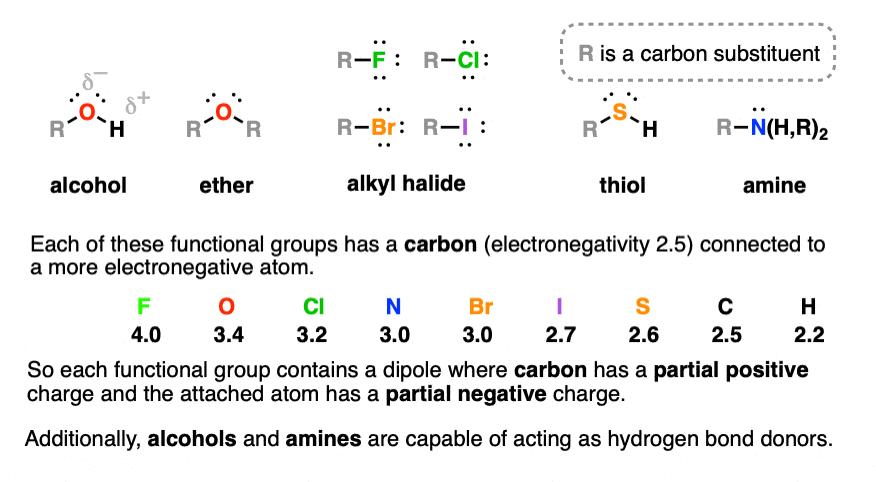
Stronger intermolecular forces are present in these functional groups due to the dipole-dipole interactions. Additionally, alcohols and amines are capable of hydrogen bonding, which further increase boiling points.
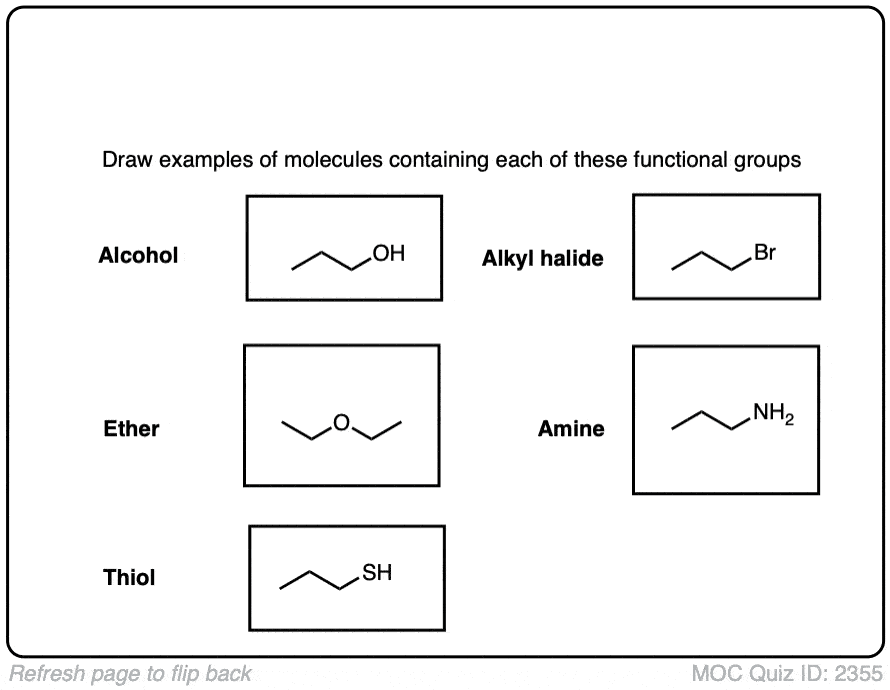
Alcohols R-OH contain carbon bonded to the hydroxyl group -OH.
- Common examples include methanol, methanol, isopropanol.
- The O-H bond is highly polarized and participates in hydrogen bonding.
- Hydroxyl groups also increase water solubility.
- Alcohols are weak acids and can also act as Lewis bases.
- Hydroxyl groups bonded to C=O are considered to be carboxylic acids, a separate functional group (see below)
Ethers R-O-R are oxygen atoms flanked by two bonds to carbon.
- Diethyl ether, tetrahydrofuran, and dioxane are ethers that are commonly used as lab solvents.
- Ethers cannot serve as hydrogen-bond donors, so their boiling points are lower than those of alcohols of equivalent molecular weight, but higher than those of hydrocarbons due to greater dipole-dipole forces.
Alkyl halides have functional group R-F, R-Cl, R-Br, R-I where R is an alkyl group.
- Bromobutane, methyl bromide, and chloroform are all examples of alkyl halides.
- Dipole-dipole interactions lead to higher boiling points than those found in alkanes.
- If R is alkene, they are alkenyl halides.
- Very important functional groups for substitution and elimination reactions.
Amines contain the functional group -NH2, -NHR, or NR2 where R is a hydrocarbon.
- Morphine, codeine, and cocaine are just three of many prominent molecules that contain amines.
- Amine substituents are known as amino groups.
- Amines with N-H bonds are capable of hydrogen bonding, which leads to higher boiling points and water solubility.
- The lone pair on the nitrogen can act as a base.
Thiols (mercaptans) R-SH are the sulfur-containing cousins of alcohols.
- The sulfur atom is not nearly as electronegative as oxygen, so the S-H bond is considerably less polarized.
- Thiols can act as weak acids; stronger acids than alcohols.
- Thiols are most notorious for their strong stench; ethanethiol is added to natural gas to give it its characteristic smell.
Draw examples of each of these functional groups.
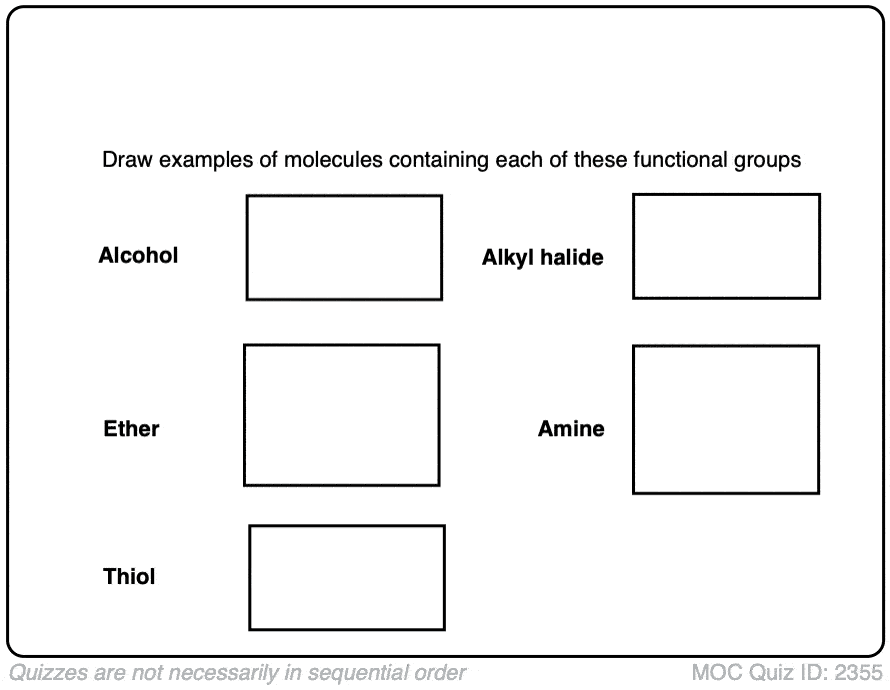 Click to Flip
Draw in the functional groups of these famous molecules.
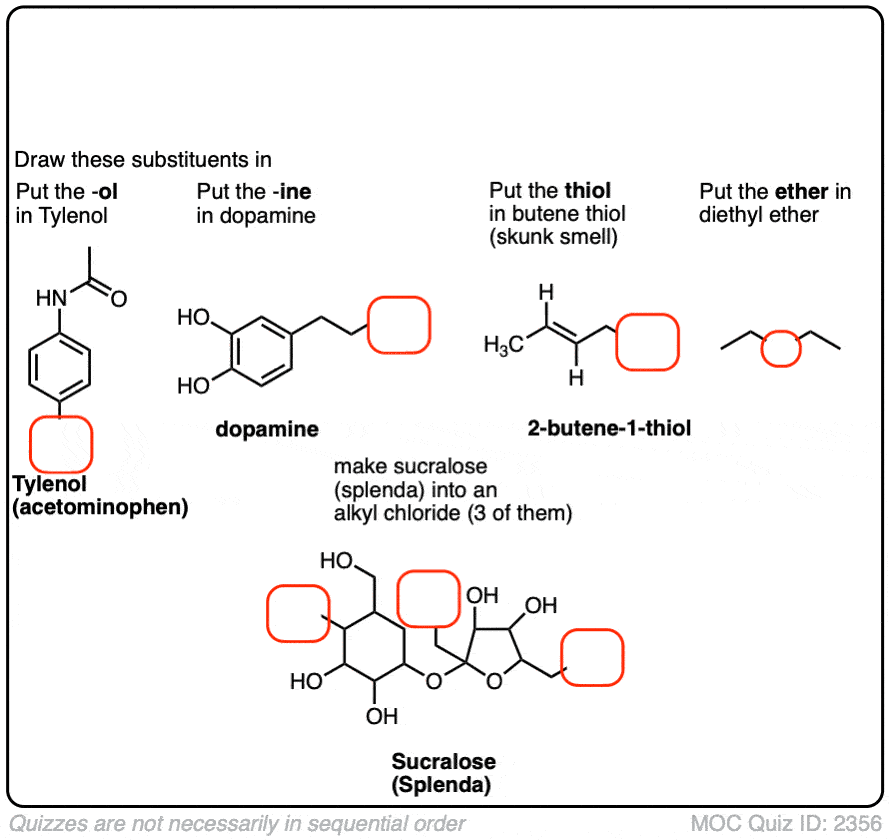 Click to Flip
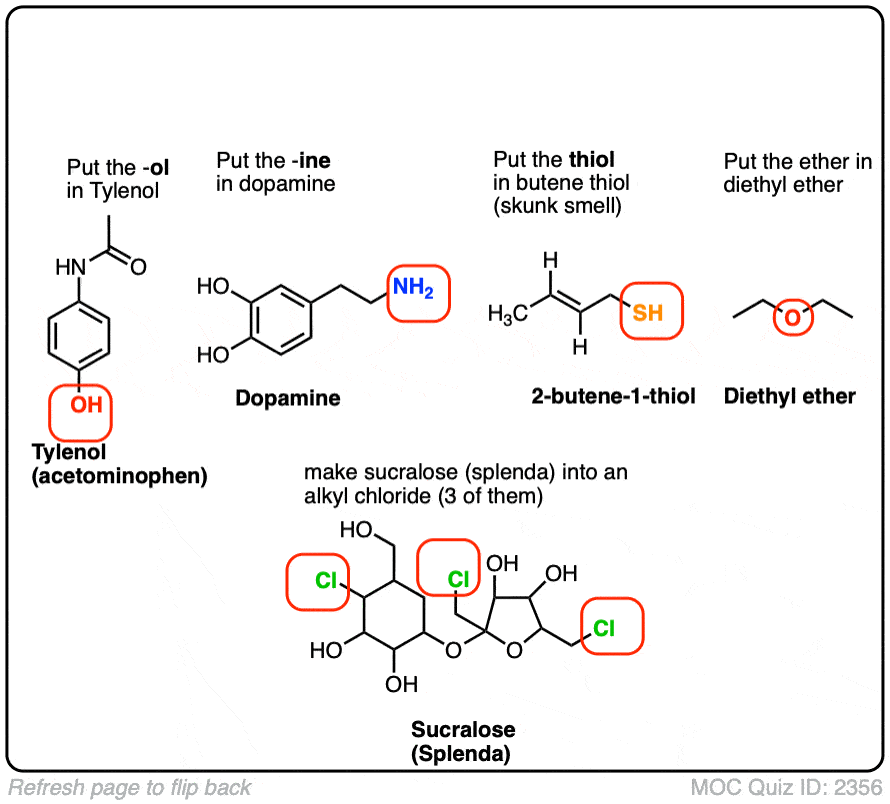
4. Aldehydes, Ketones, Carboxylic Acids, Esters
The C=O group is referred to as the carbonyl group. The C=O bond is strongly polarized towards oxygen and the carbon bears a partial positive charge.
Carbonyls are found in aldehydes, ketones, esters, and carboxylic acids.
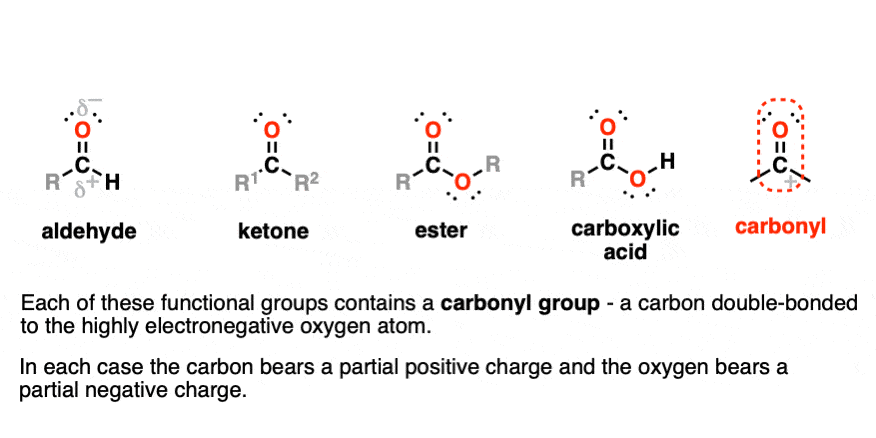
Aldehydes RCHO have C=O bonded to carbon and to C-H
- Formaldehyde, acetaldehyde, and benzaldehyde are common examples.
- They have polar covalent bonding but are not hydrogen bond donors
Ketones RC(O)R have C=O bonded to two carbons.
- Acetone (2-propanone) is nail polish remover.
Carboxylic Acids RCOOH have a carbonyl bonded to -OH. They are distinct functional groups from alcohols.
- Acetic acid (vinegar) and formic acid are the simplest carboxylic acids. Other short-chain acids like butanoic and pentanoic acids are notorious for their locker-room smells (or worse).
- The hydroxyl group participates in hydrogen bonding and carboxylic acids have higher boiling points as a result.
- Despite the name, carboxylic acids tend to be relatively weak acids, not undergoing full dissociation in water (as compared to strong acids such as HCl and H2SO4).
Esters RCOOR are similar to carboxylic acids, except the O-H bond is replaced with an O-C bond.
- Esters are notable for their sweet smells
- Contain polar bonds, but do not participate in hydrogen bonding.
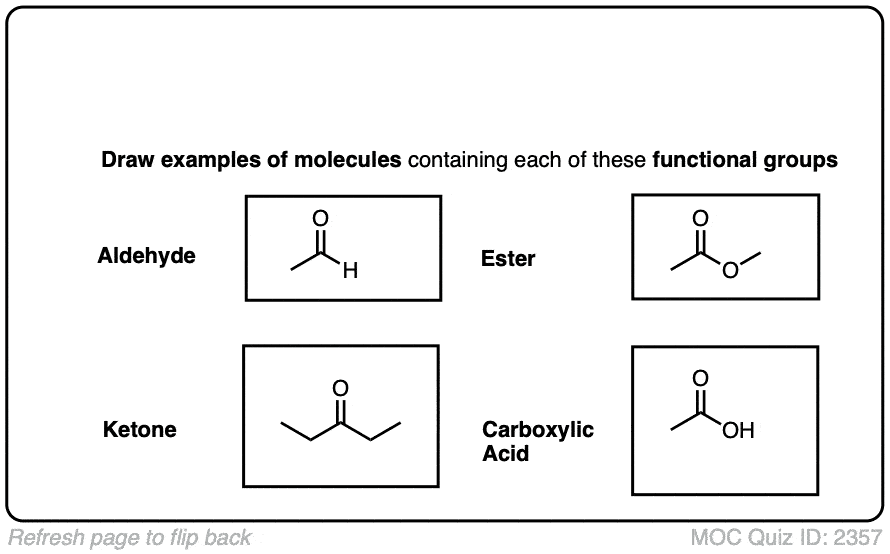
Draw an example of an aldehyde, ketone, carboxylic acid, and ester
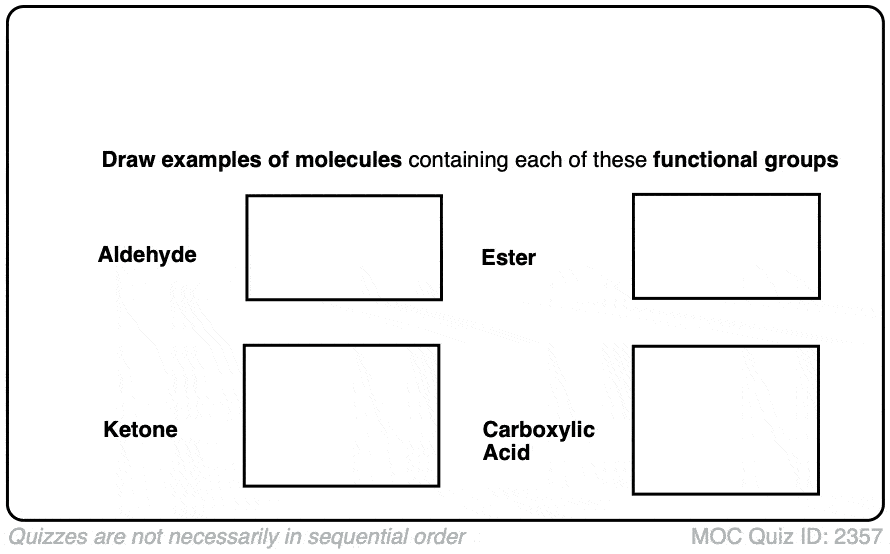 Click to Flip
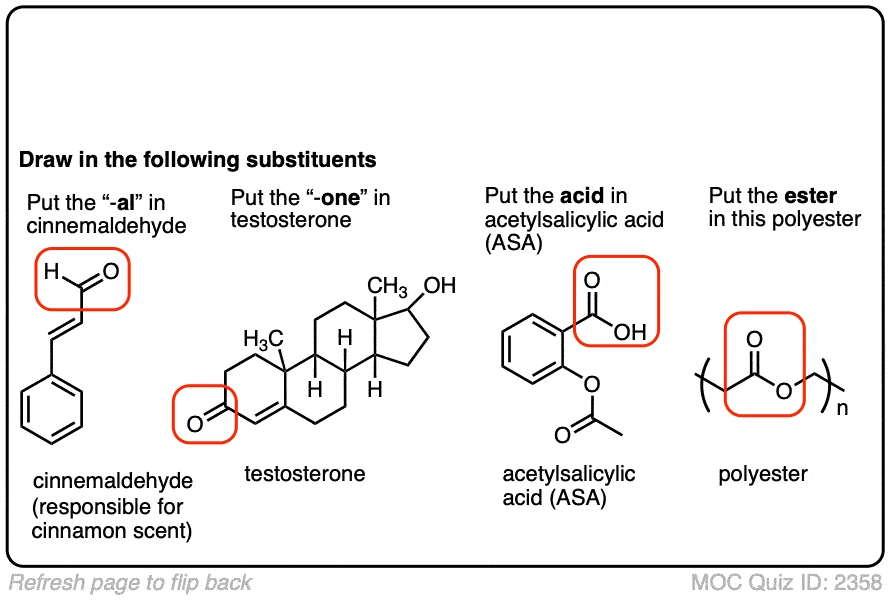
Draw in the functional group for these prominent molecules.
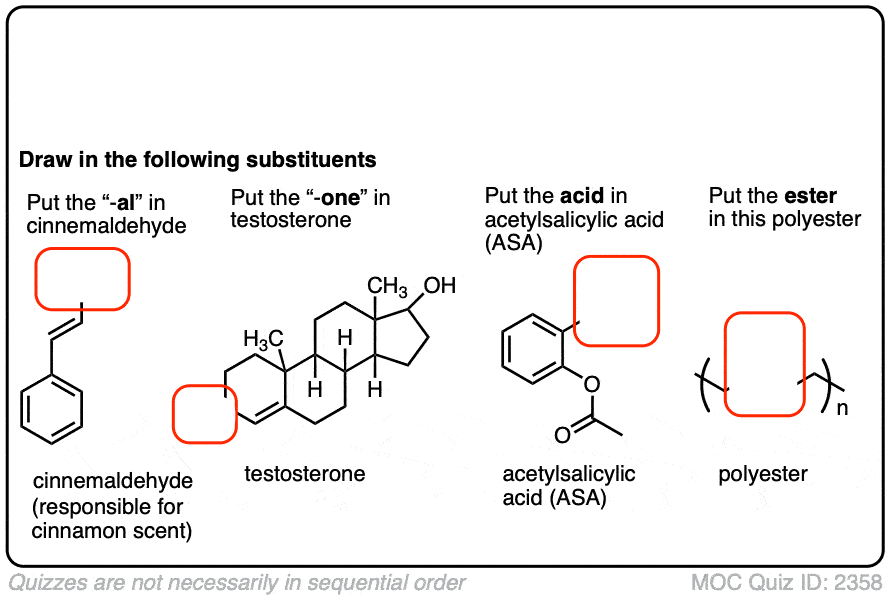 Click to Flip
5. Amides, Acid Halides, Anhydrides, Nitriles
There are actually quite a few important functional groups containing carbonyls. These functional groups are all considered to be derived from carboxylic acids, as they can be obtained through replacement of OH with various groups. (Nitriles might not appear to be related to carboxylic acids at first glance, but they can actually be converted into amides through dehydration.)
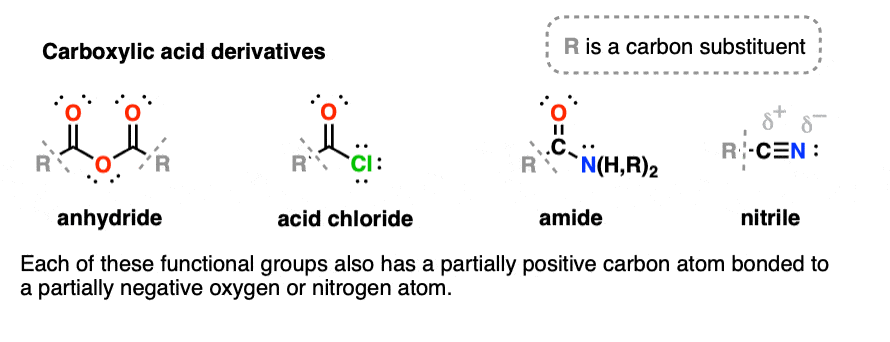
Amides contain a carbonyl carbon attached to an amino group.
- Amino acids linked together through formation of an amide are known as peptides.
- Amides containing N-H bonds can participate in hydrogen bonding.
Acid Halides have -OH replaced with F, Cl, Br, or I.
Anhydrides contain an oxygen flanked by two carbonyls. Distinct from esters.
- Anhydrides can be formed from two equivalents of a carboxylic acid with accompanying loss of H2O, hence the name.
Nitriles don’t look like carboxylic acid derivatives at first, but they can be formed via the dehydration of amides.
- Acetonitrile is a common solvent.
- “Nitrile gloves” are made from nitrile rubber, a co-polymer of butadiene and acrylonitrile.
- The -CN substituent is sometimes referred to as a cyanide.
- HCN, hydrogen cyanide, is a highly toxic gas. The cyanide ion (-)CN, is often encountered in introductory courses (on paper, not in the lab!) and undergoes reactions with alkyl halides.
Draw in examples of an amide, acid halide, anhydride, and nitrile.
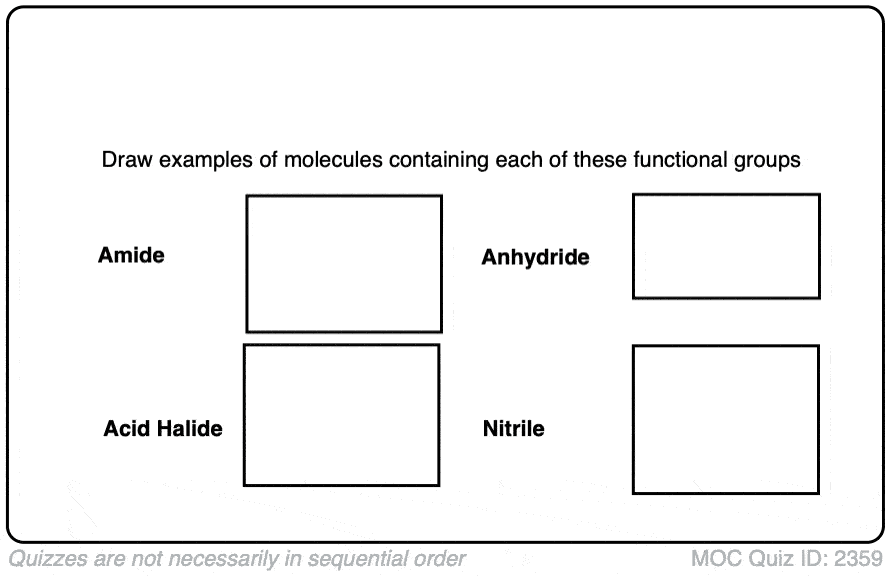 Click to Flip
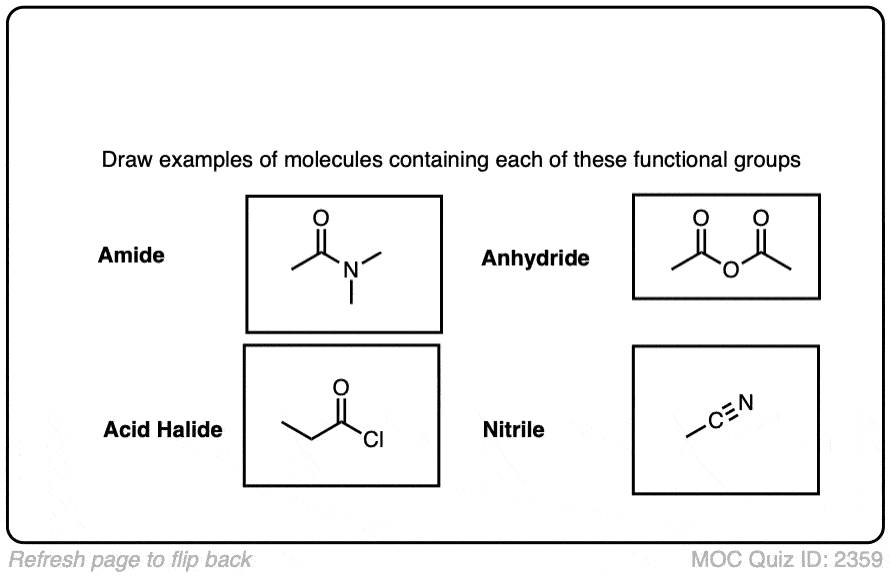
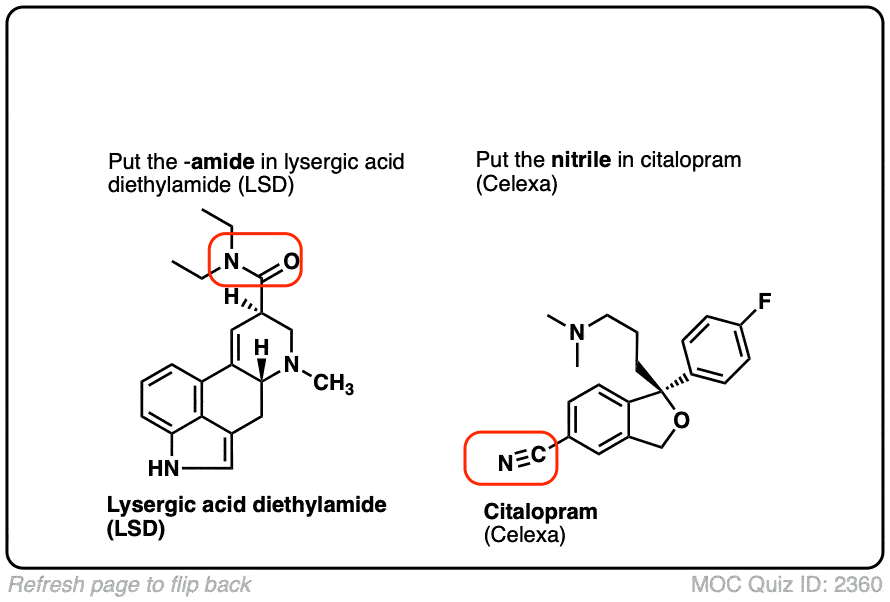
Fill in the functional groups of these famous molecules.
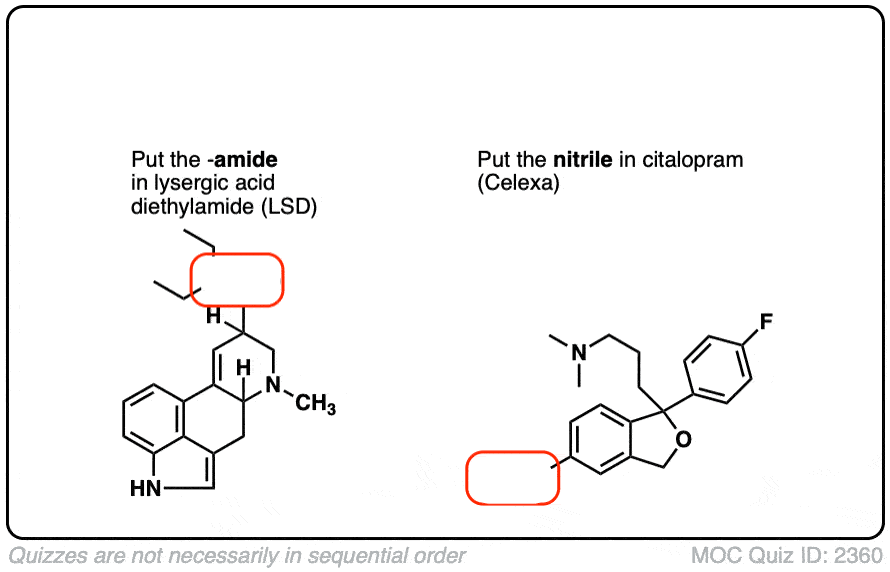 Click to Flip
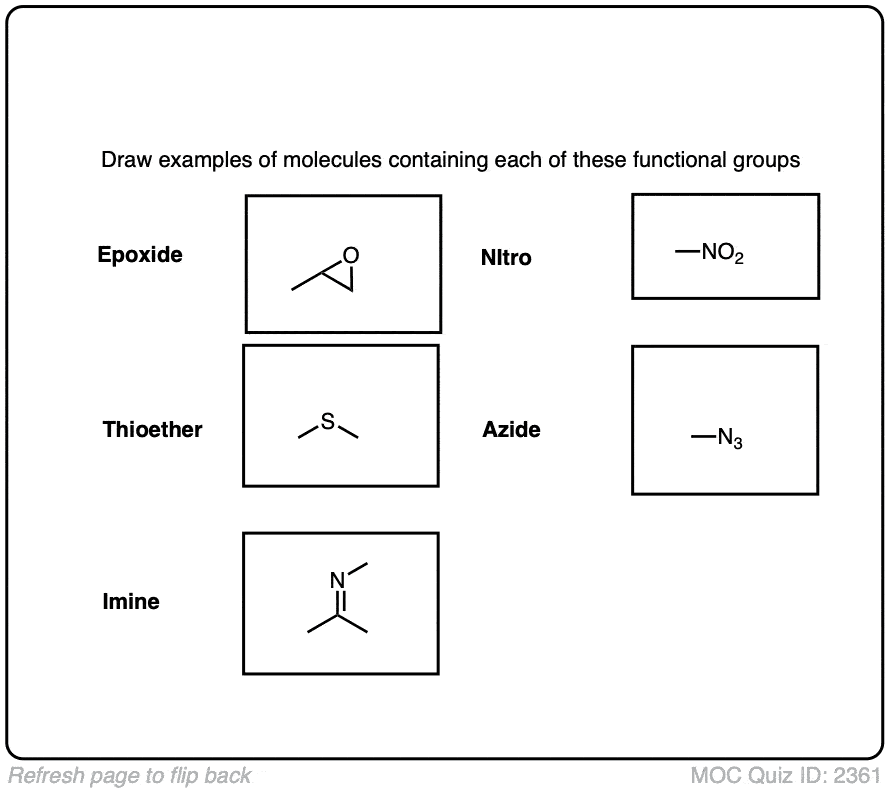
6. Miscellaneous: Epoxides, Thioethers, Nitro, Imine, Azide
No common thread here; just a few more prominent functional groups worth knowing.
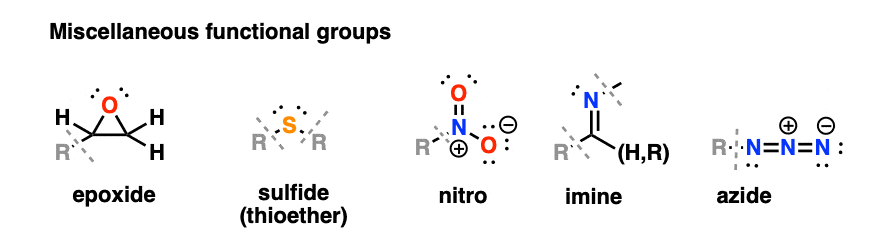
Technically, Epoxides are ethers, but since they participate in a number of reactions that ethers generally don’t , they deserve their own category.
Thioethers (sulfides) are the sulfur equivalents of ethers. Dimethyl sulfide is the most commonly encountered example.
Nitro groups are strongly electron-withdrawing. Nitromethane, a solvent, is the simplest example of a nitroalkane.
Imines are the nitrogen-containing equivalents of aldehydes and ketones.
Azides pop up from time to time. The “A” in the anti-HIV drug AZT stands for azido.
Draw in the functional groups in these molecules.
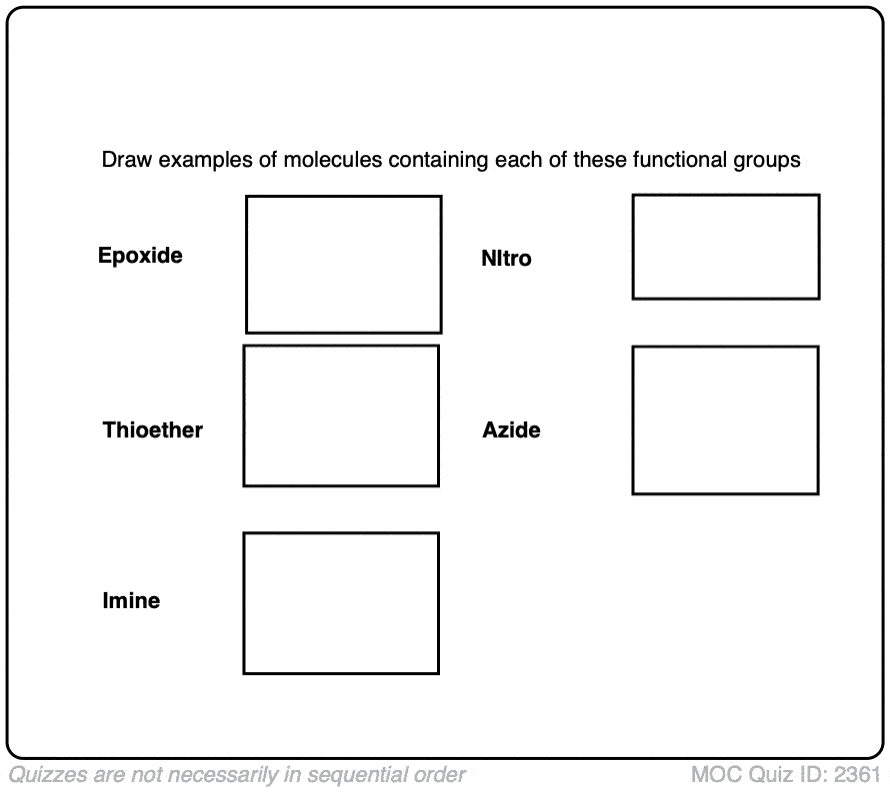 Click to Flip
7. That’s Probably Enough For Now
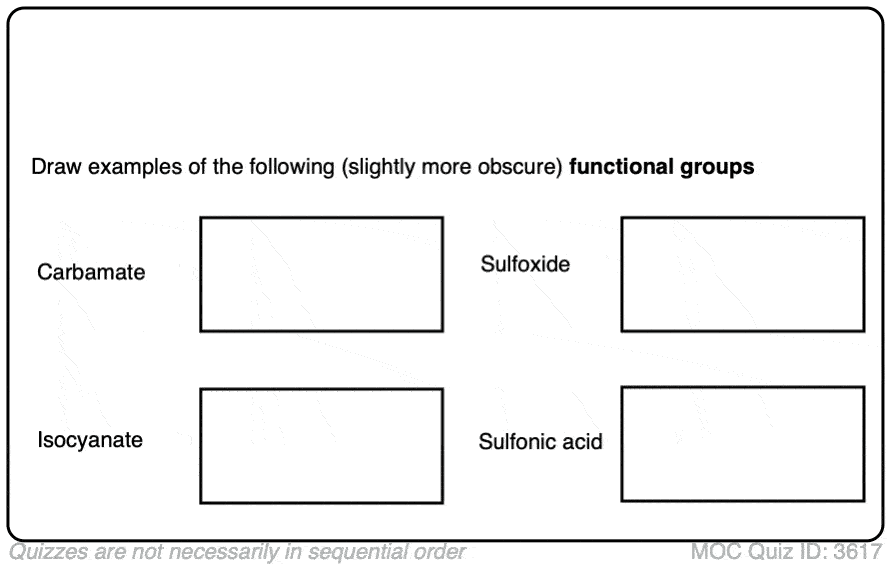
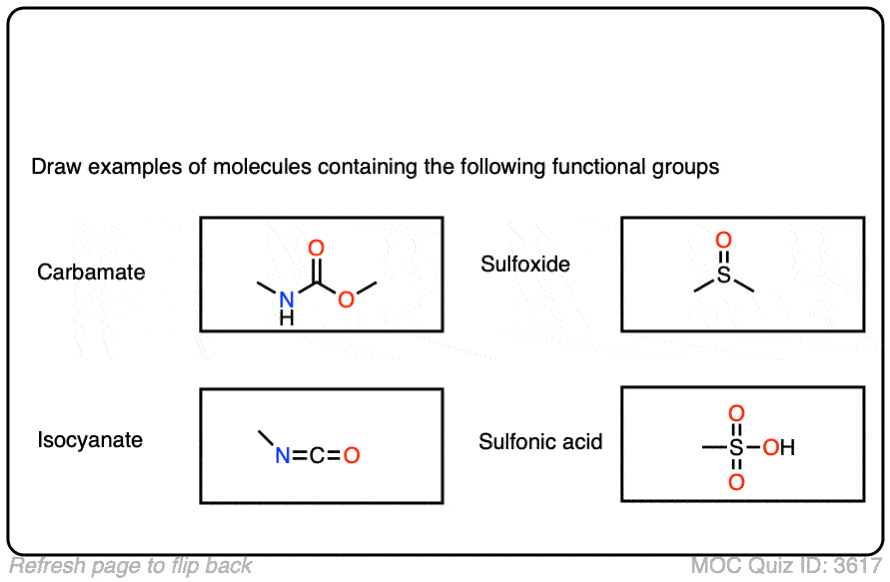
Of course there are more functional groups that you will encounter, but this list should be sufficient for most students in an Org 1 course. Past a certain point, the law of diminishing returns starts to apply. Here’s a final quiz on a few functional groups that are occasionally encountered in undergraduate organic chemistry:
 Click to Flip
The sooner you try to get beyond knowing the name of a functional group and start to apply concepts like electronegativity and resonance, the more “alive” each of these functional groups will seem to you.
Notes
Quiz Yourself!
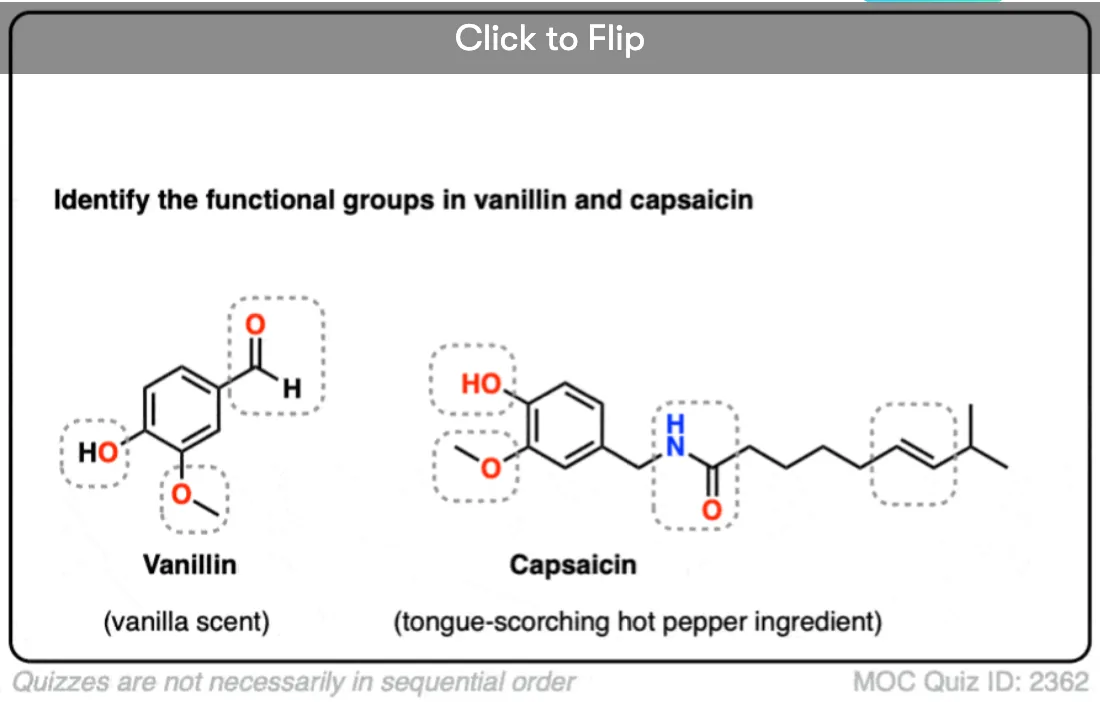
Become a MOC member to see the clickable quiz with answers on the back.
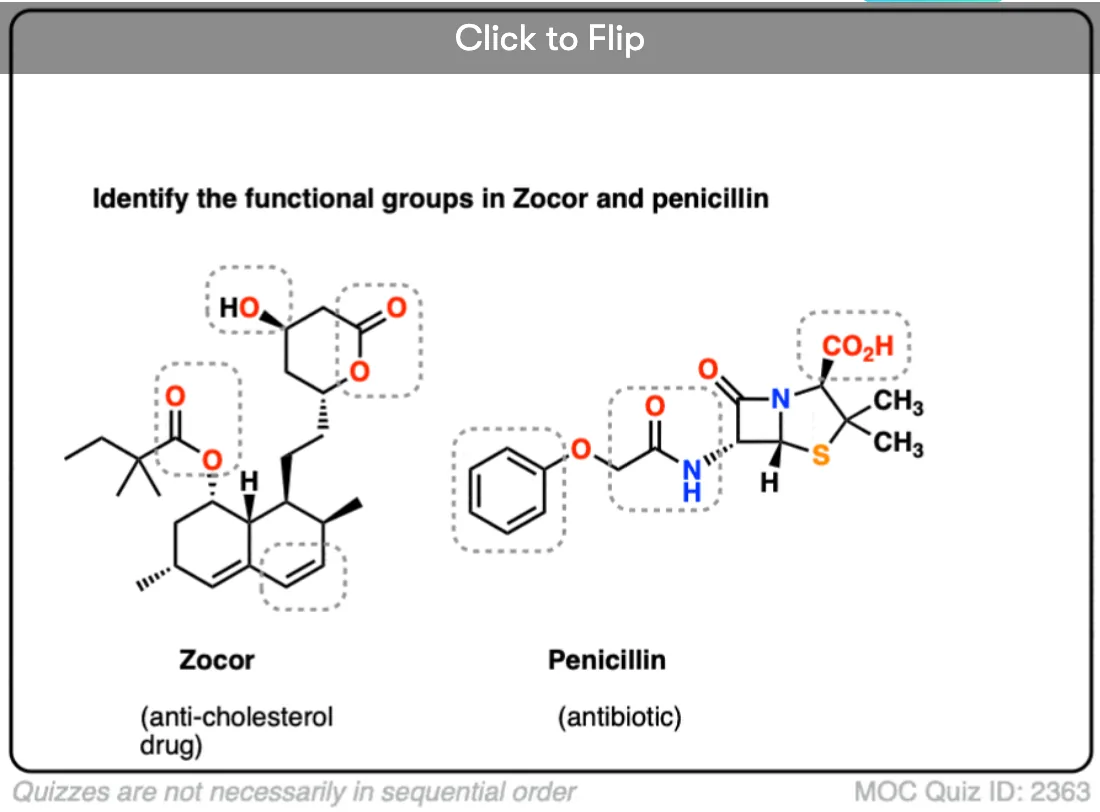
Become a MOC member to see the clickable quiz with answers on the back.
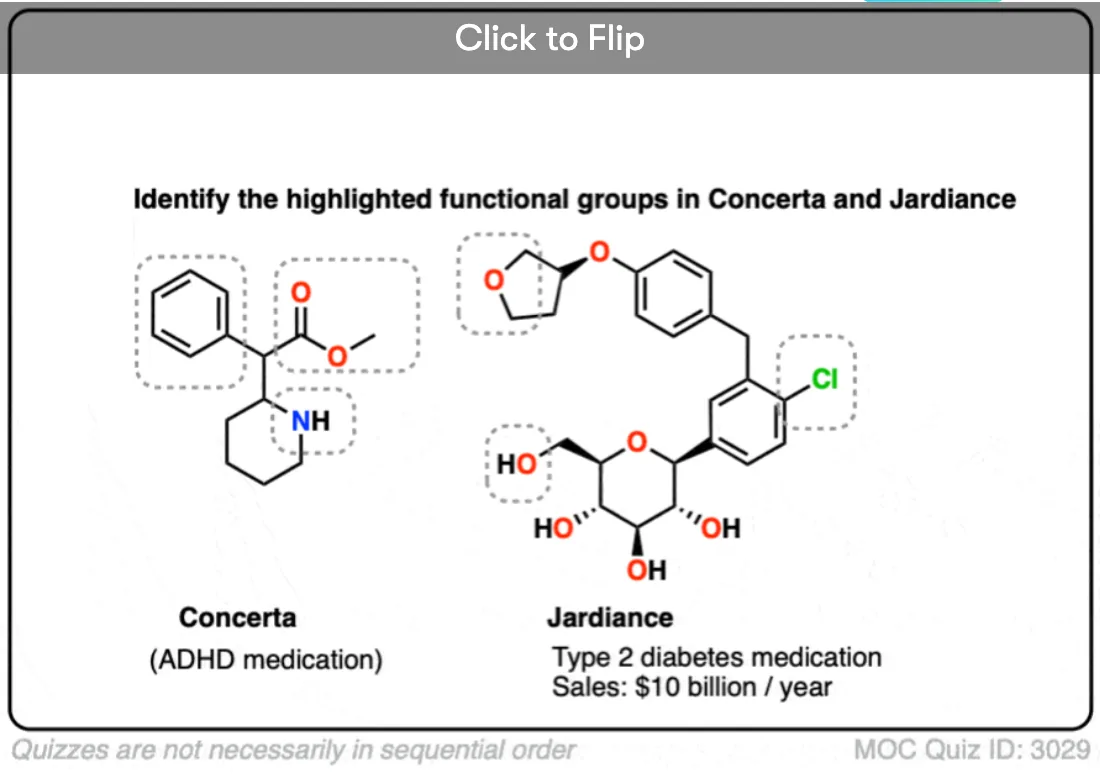
Become a MOC member to see the clickable quiz with answers on the back.
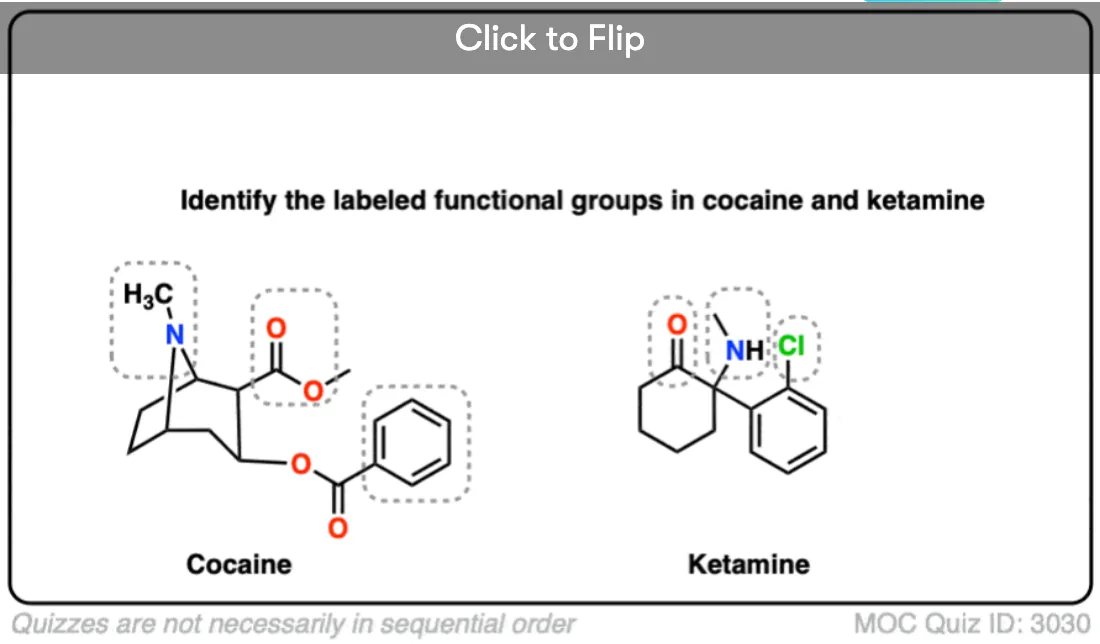
Become a MOC member to see the clickable quiz with answers on the back.
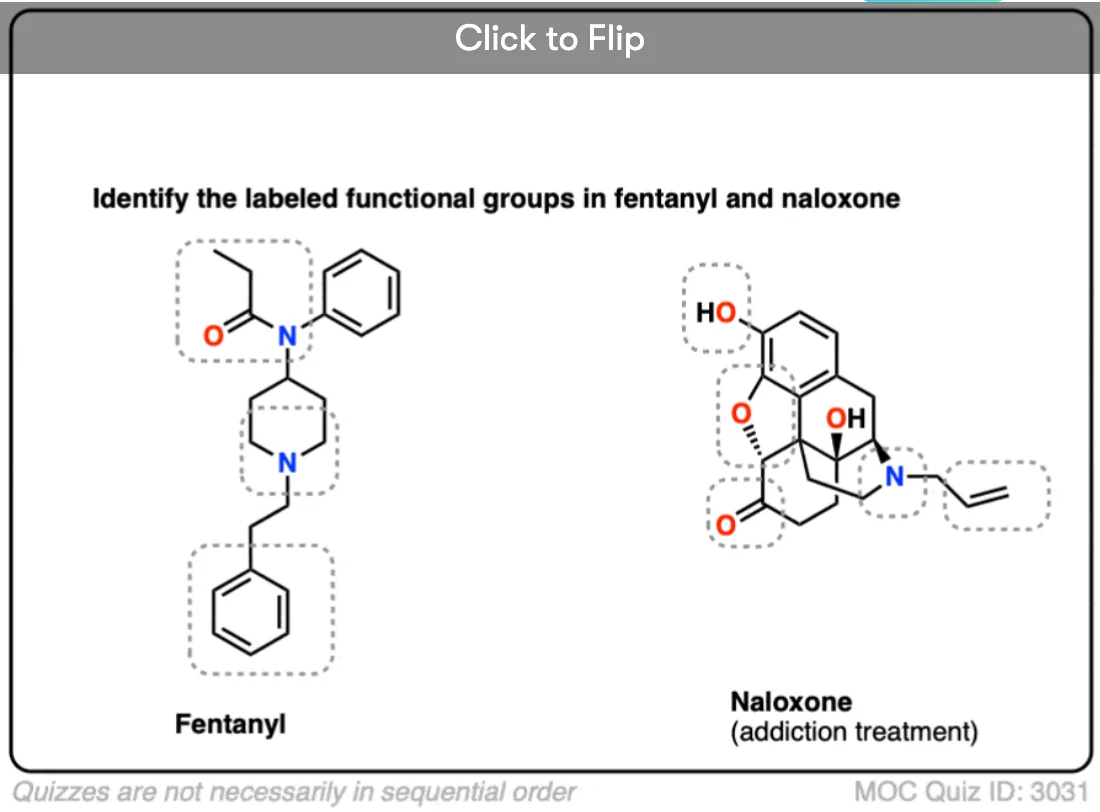
Become a MOC member to see the clickable quiz with answers on the back.
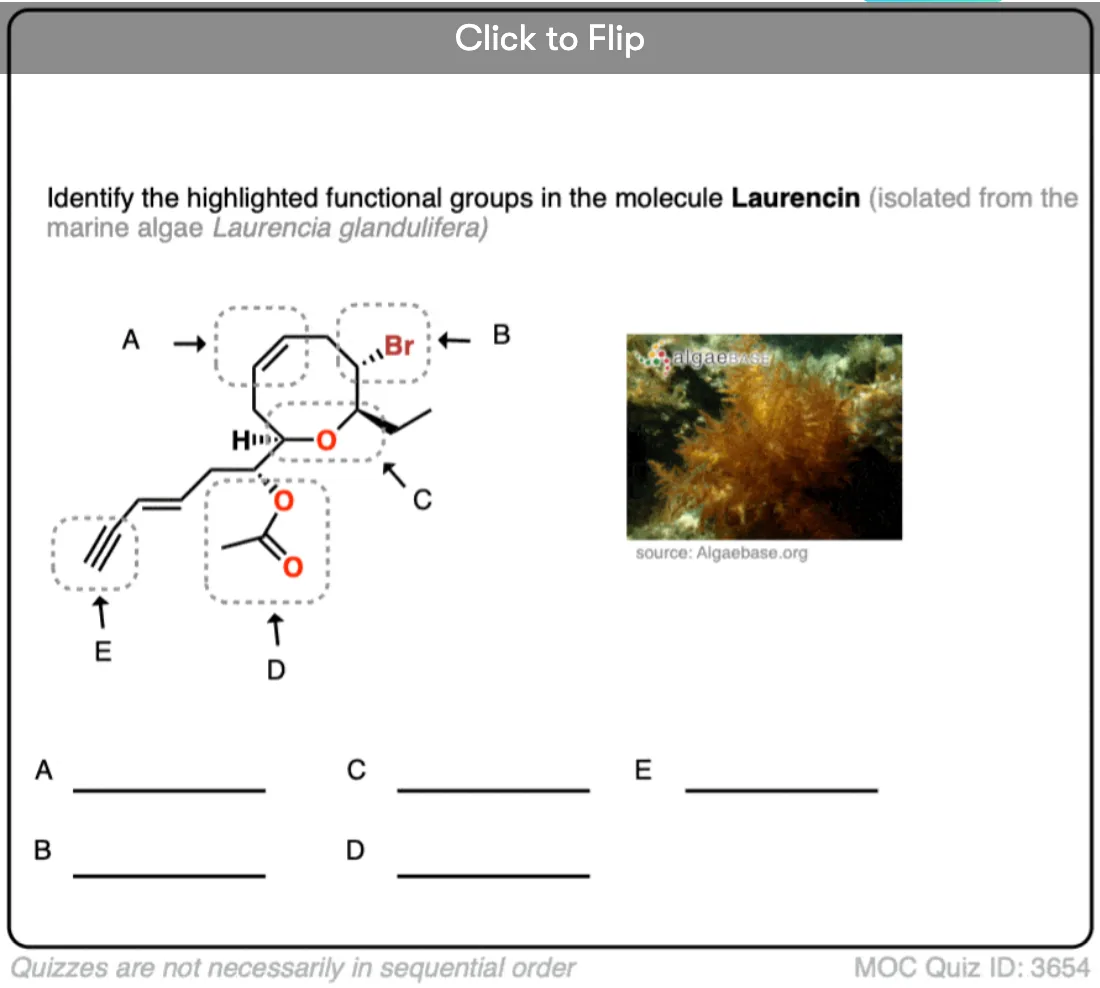
Become a MOC member to see the clickable quiz with answers on the back.
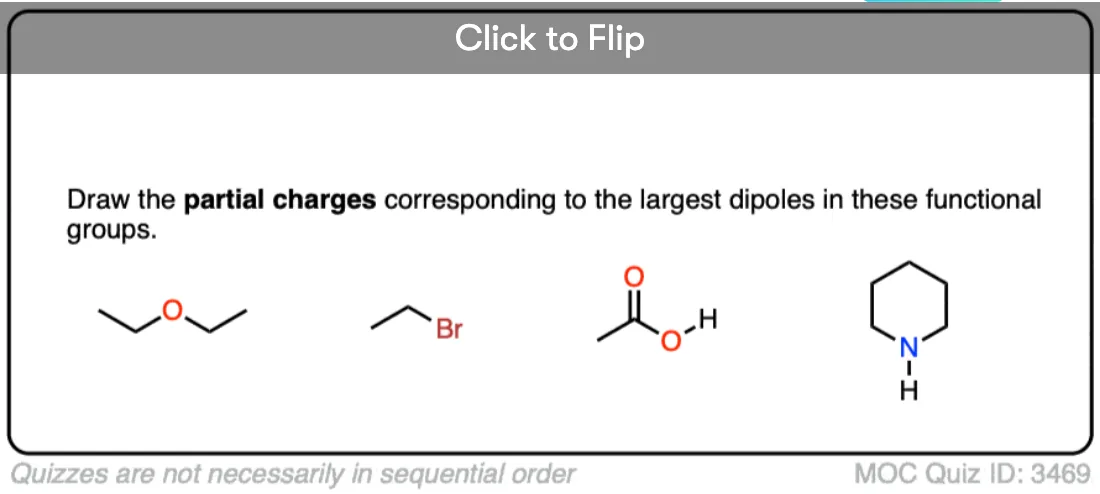
Become a MOC member to see the clickable quiz with answers on the back.
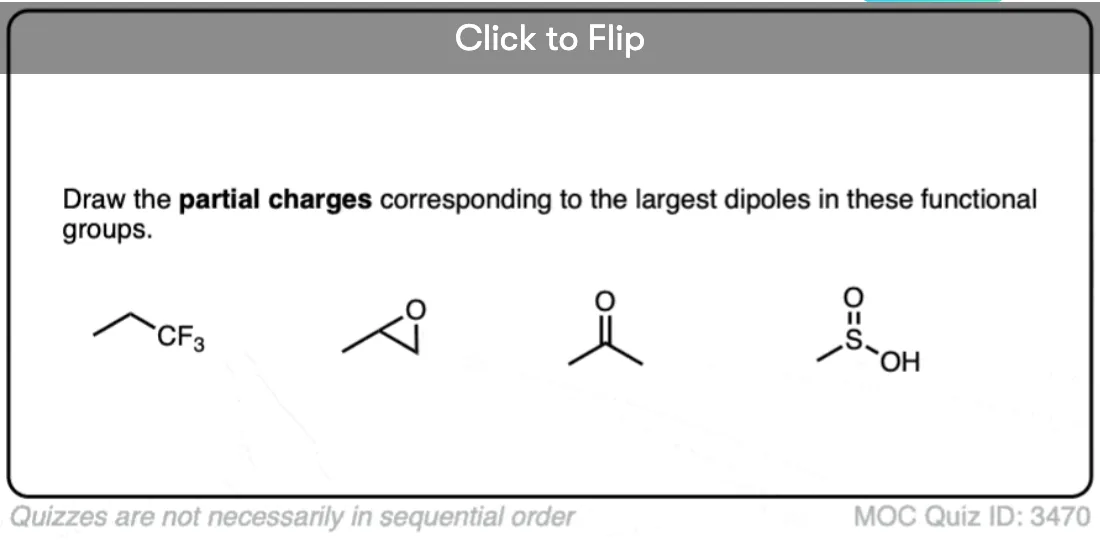
Become a MOC member to see the clickable quiz with answers on the back.
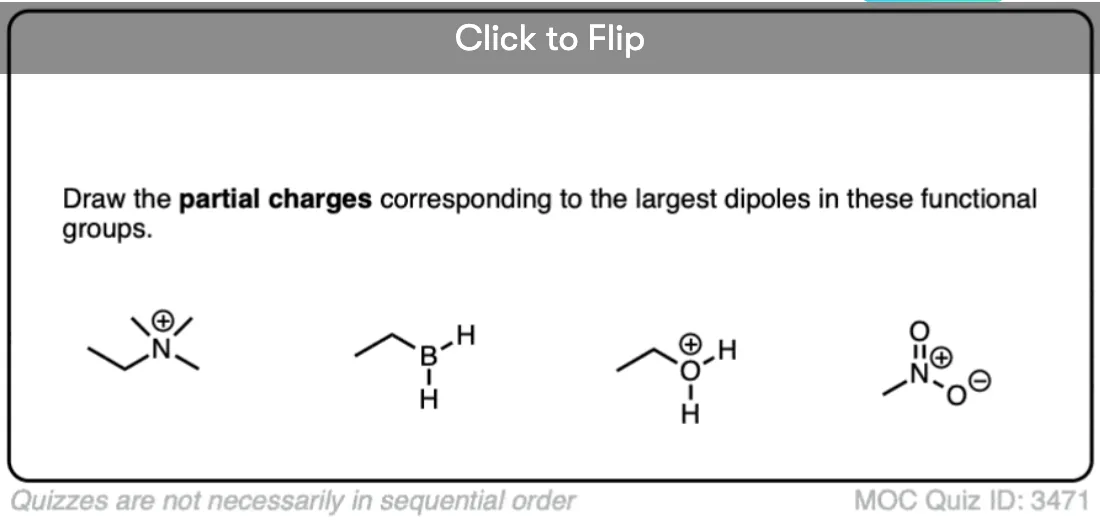
Become a MOC member to see the clickable quiz with answers on the back.
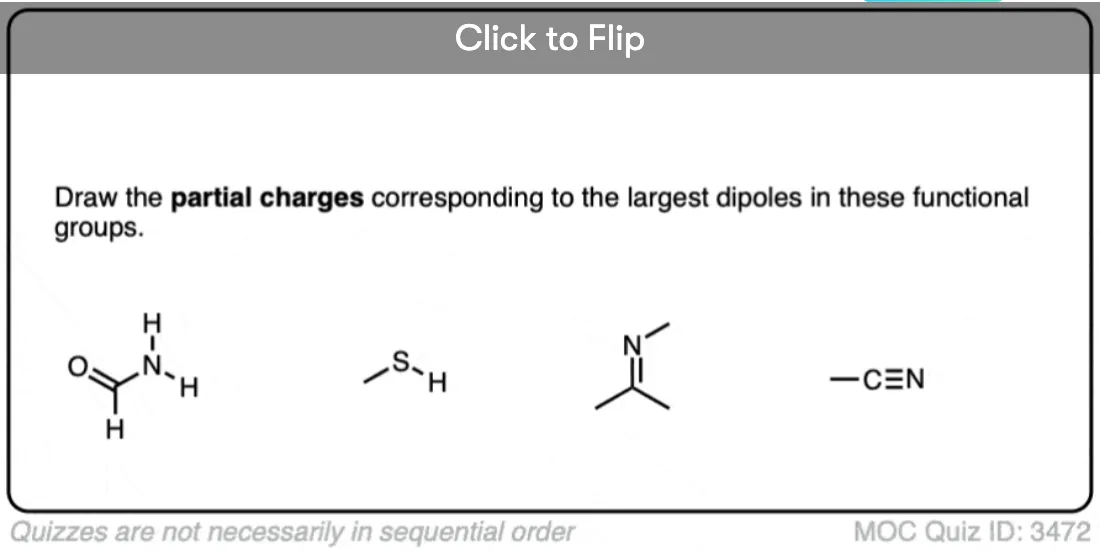
Become a MOC member to see the clickable quiz with answers on the back.
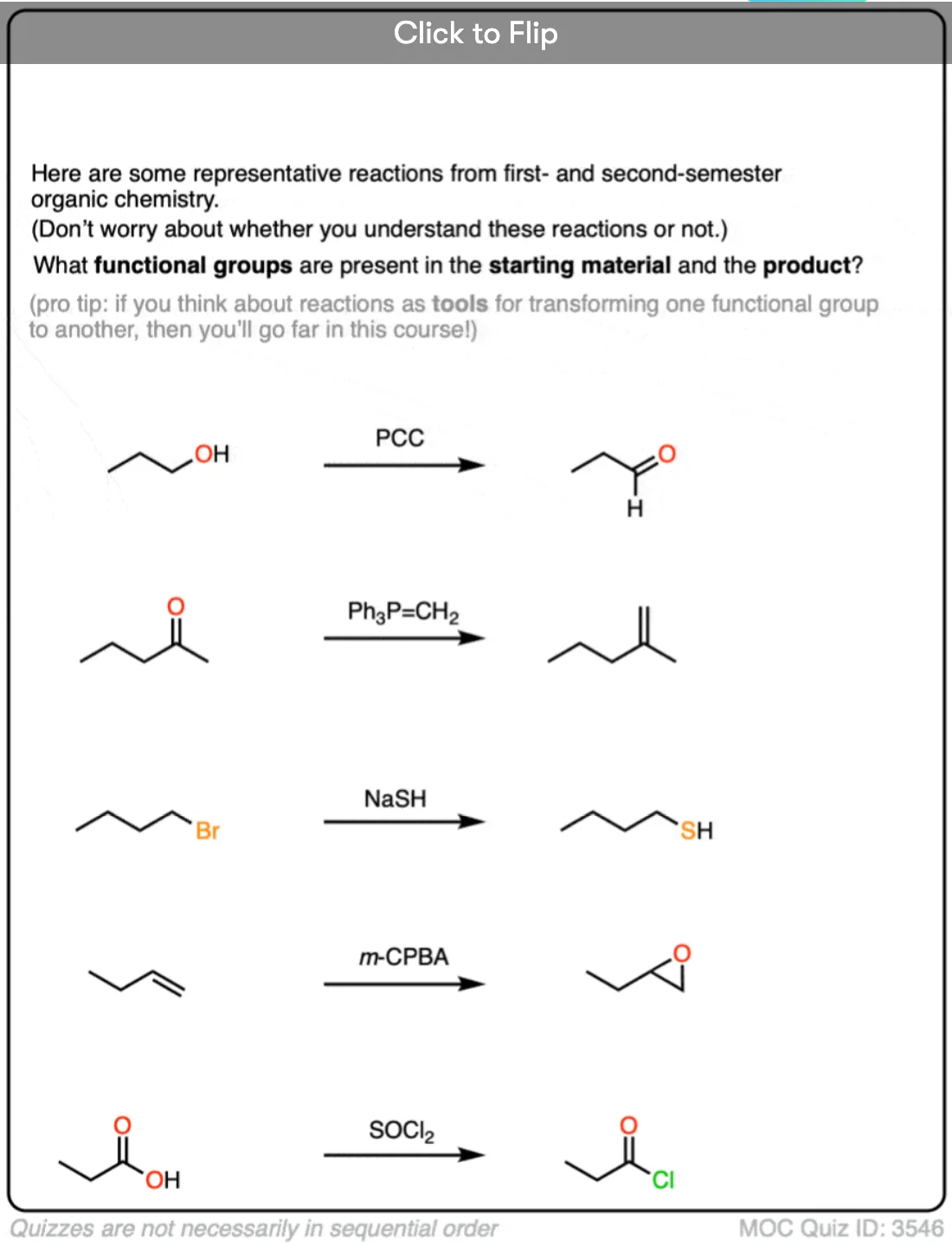
Become a MOC member to see the clickable quiz with answers on the back.
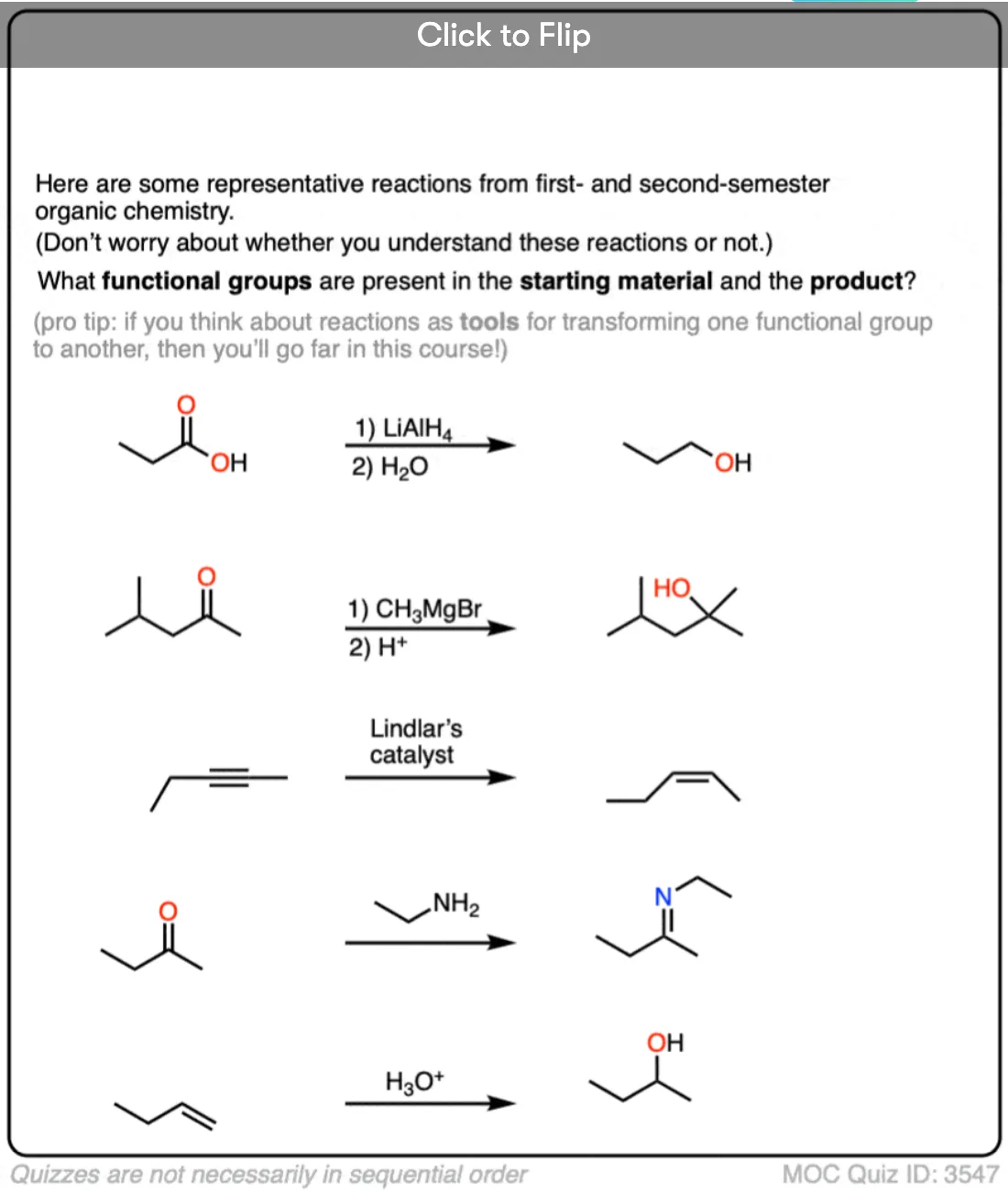
Become a MOC member to see the clickable quiz with answers on the back.
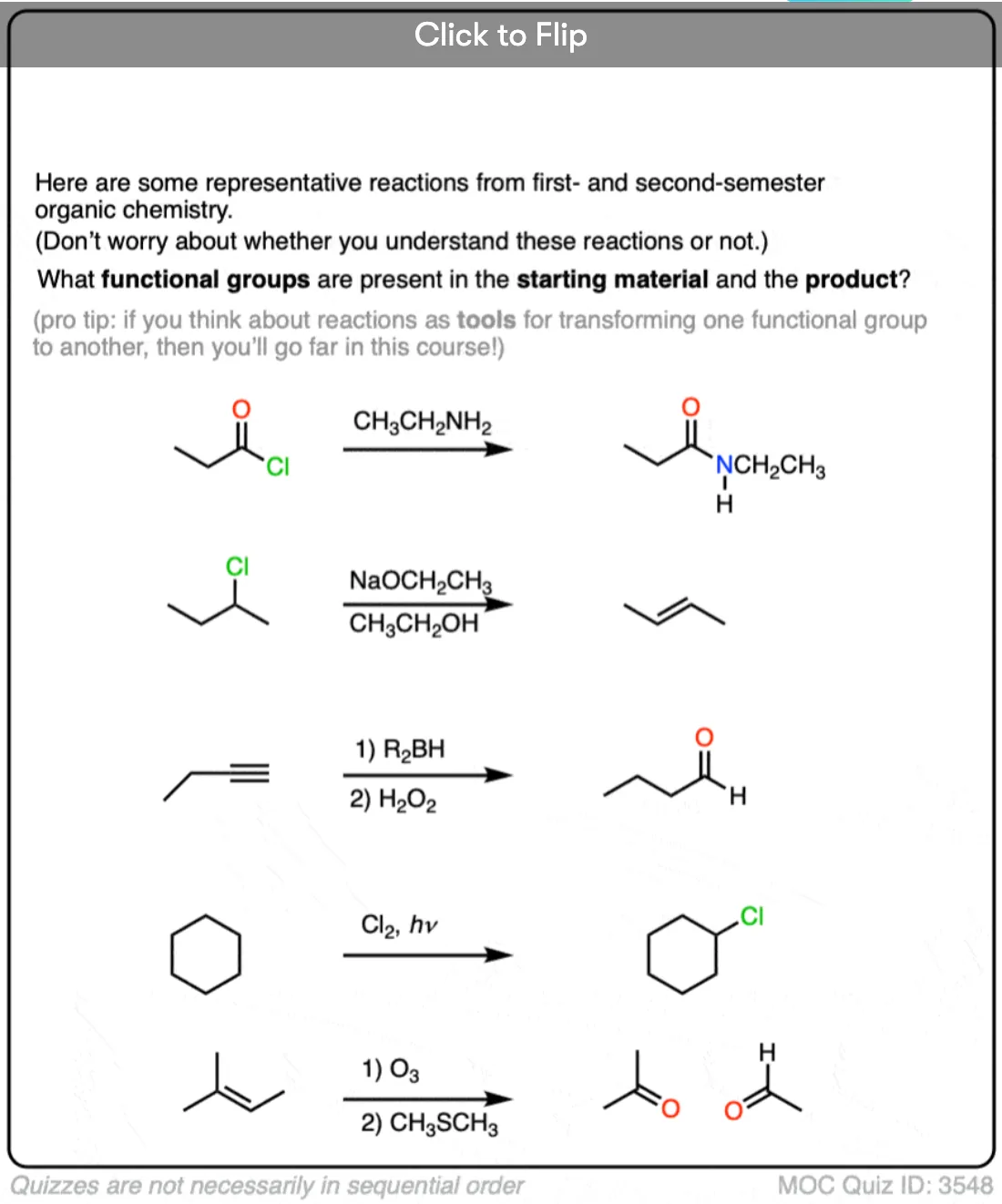
Become a MOC member to see the clickable quiz with answers on the back.
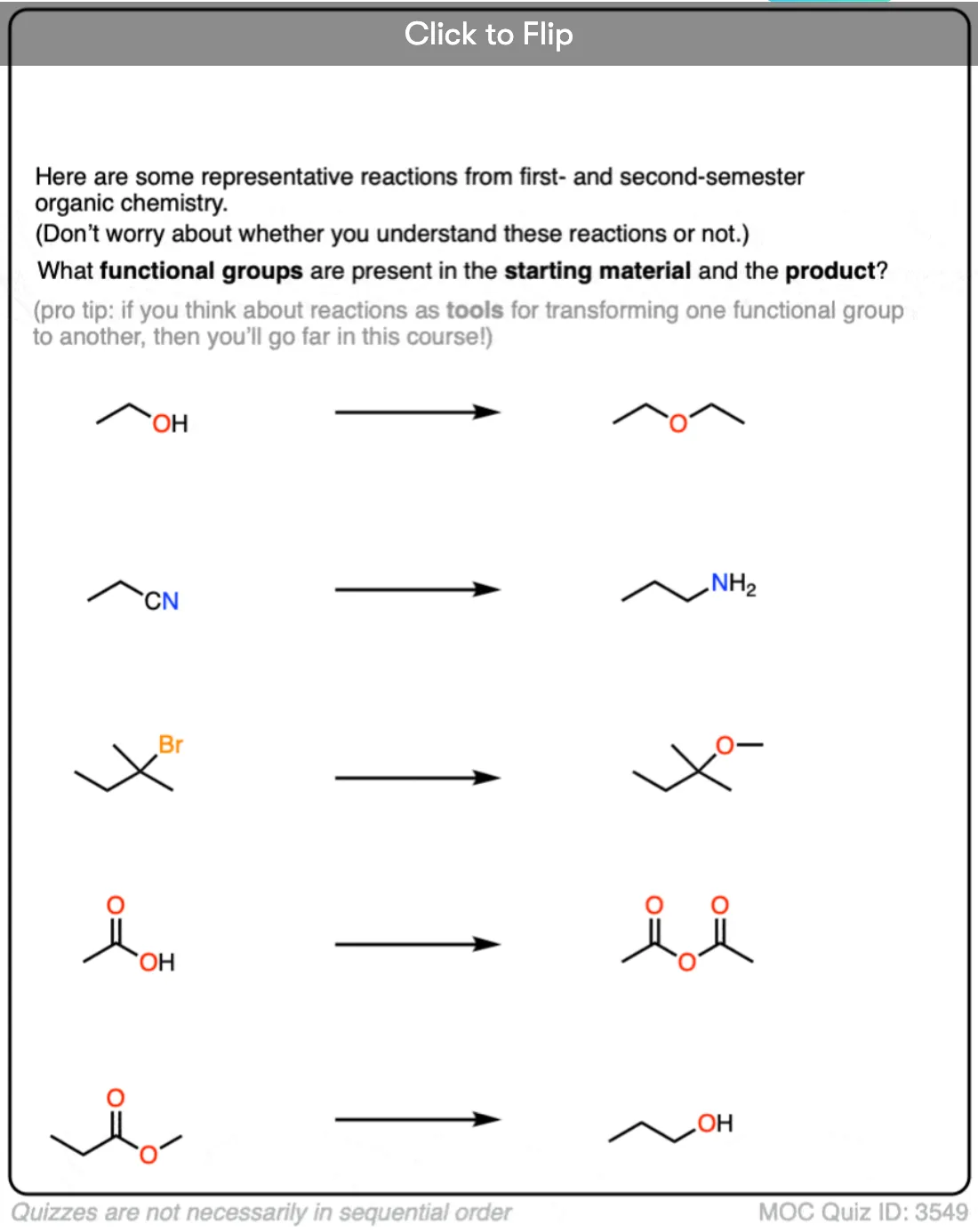
Become a MOC member to see the clickable quiz with answers on the back.
(Advanced) References and Further Reading
- Relating Functional Groups to the Periodic Table
Jef Struyf
Journal of Chemical Education 2009 86 (2), 190
DOI: 10.1021/ed086p190 - Learning the Functional Groups: Keys to Success
Shannon Byrd and David P. Hildreth
Journal of Chemical Education 2001 78 (10), 1355
DOI: 10.1021/ed078p1355
Thank you so much. But I want these functional groups in priority order, where can I get?
There’s an article on functional group priority:
https://www.masterorganicchemistry.com/2011/02/14/table-of-functional-group-priorities-for-nomenclature/
Dear Master Organic Chemistry Team,
I hope this message finds you well. As a dedicated JEE aspirant navigating the complexities of organic chemistry, I wanted to take a moment to express my heartfelt gratitude for the invaluable resources you provide on your website. Your clear explanations, innovative approach to problem-solving, and engaging content have significantly enhanced my understanding of the subject.
The structured lessons and practical tips you offer not only demystify challenging concepts but also foster a genuine interest in organic chemistry. I have found your guides particularly helpful in my preparation, making the subject more approachable and enjoyable.
Thank you for your commitment to education and for the positive impact you have on students like me. I truly appreciate your work and look forward to continuing to learn from your insights as I strive to excel in my studies.
Warm regards,
Anuj Kshirsagar
Thank you. I am very glad you find the website useful!
It is very helpful
Thank you so much
I got what I wanted
Greetings from nigeria
Hi James, Thank you. Your site is extremely helpful as I am not a science student and need to learn chemistry. I tried to access the quiz (http://memorize.com/organic-chemistry-functional-groups/orgohacks) but it won’t load. Is the link still valid? Thanks
Memorize.com is dead, unfortunately. I should take down that link.
This helped a lot! Merci beaucoup
Hi James,
I am having a tough time these days justifying calling a hydroxyl group and alcohol group. Has this always been predominate? I was not trained this way and I can’t imagine calling something like an oxime, an alcohol.
— Kyle
Kyle – that’s a good point. I should change these figures to remove this ambiguity and avoid any confusion. Thank you for commenting.
Thanks for this 😊
Glad you found it helpful!
5 year late comment but still may matter for context, thiols are perhaps more significant in Biochemistry, see the functional group of Cystine, a particularly important amino acid.
There is absolutely no point in putting a list of names associated with molecular configuration unless you give a description of why a particular functional group is important in chemistry. One needs real scientific insight not just another lesson in learning a language.
Hello, I would like to know what ester would be best to make my science teacher (Paul) fall in love with me, I was thinking something fruity, Many thanks XOXOXOXOXO
I would move thiols to the second list, and move epoxides, imines, and acid chlorides to the first list. The latter two become incredibly relevant when discussing carbonyl addition/elimination reactions and enamine chemistry.
Hi, I’m a bit stuck. I need to find out the boiling points of pentanoic acid and 2-hexanone which I’ve already done, and compared both to find that pentanoic acid has the higher boiling point. I then need to give some sort of example and then justify this but i am not sure how to do so, could you please help?
Thankyou :)
hi Tanya! pentanoic acid has intermolecular H bridges, and hexanone, hasn´t. this fact accounts for the higher boiling point. greetings from argentina
Hello,
I would like to use the diagram from the following page in a coursepack for a course to be held at Fleming College in Ontario, Canada this fall:
https://www.masterorganicchemistry.com/2010/10/06/functional-groups-organic-chemistry/
Can you tell me whether I have permission to do this, or how I can obtain permission?
Many thanks,
Sara Cameron
Canadian Scholars’ Press Inc. (CSPI)
This entire website is an amazing resource for MCAT studying. I’m surprised you don’t have a book deal yet. thank you thank you thank you!
sir the article was really nice and informative but I did not get what I wanted…
my ques is
I hve a substituted benzene with OCH3, NO2 and Br attached at 1, 3, 5 position
so how will I name it?
will it be bromobenzene or nitrobenzene…
and in what order will I number the carbons acc to IUPAC?
PLEASE PLEASE REPLY ASAP..
I will be highly grateful.
Are you sure about the positions of Br and NO2 in this compound you have described. As it is a ether group, the functional group will be at the 5 position.
Its name is 3-Nitro 5-Bromo benzyl methyl ether
benzyl merhyl ether isn’t IUPAC compliant. 3 nitro 5 bromo methoxybenzene
Functional groups are named in alpha order if equivalent positions (3 or 5).
Therefore 3-bromo, 5-nitro methoxybenzene or, since anisole IS recognized, 3-bromo, 5-nitro anisole.
The name will be 3-nitro 5-bromo methoxy benzene
good, not bad.
thanks for posting this