Blog
The Organic Chemistry Reagent Guide is here!
Last updated: December 18th, 2020 |
It’s taken a long time – late April through early May was hectic – but today I’m thrilled to finally announce the launch of the “Organic Chemistry Reagent Guide“, a guide designed especially for undergraduate students taking Org1/Org 2. It’s has pretty much all the reagents you need to know about, from Ag2O to Zn(Hg).
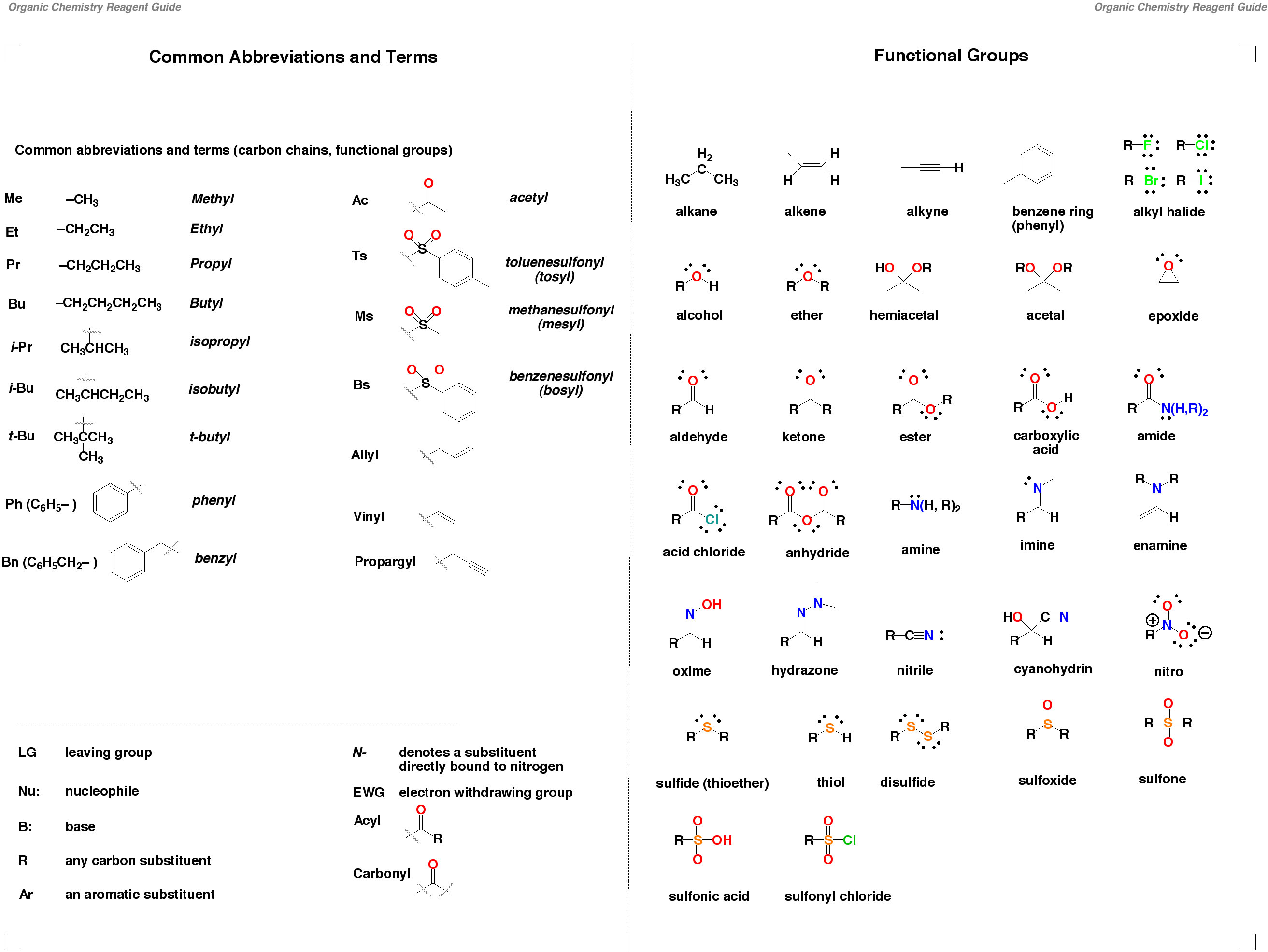
-a front section with extensive tables, including lists of acids, bases, oxidizing agents, reducing agents, reagents that add to aromatic rings, and organometallic reagents. Plus tables of common abbreviations, solvents, and pKas. There’s even a guide to Greek!
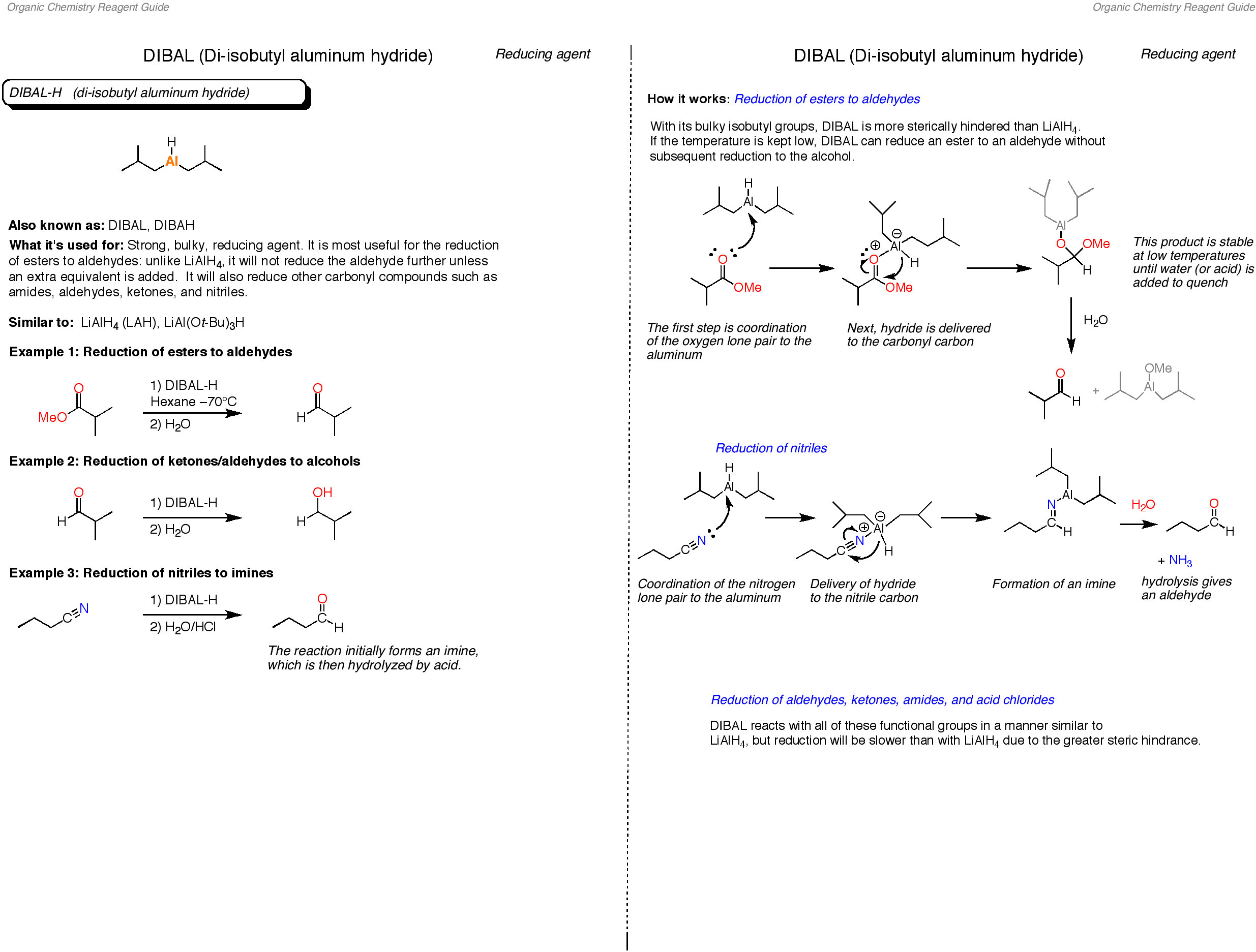
-a back section with profiles on over 80 reagents, including their structures, common names, reactions, and mechanisms
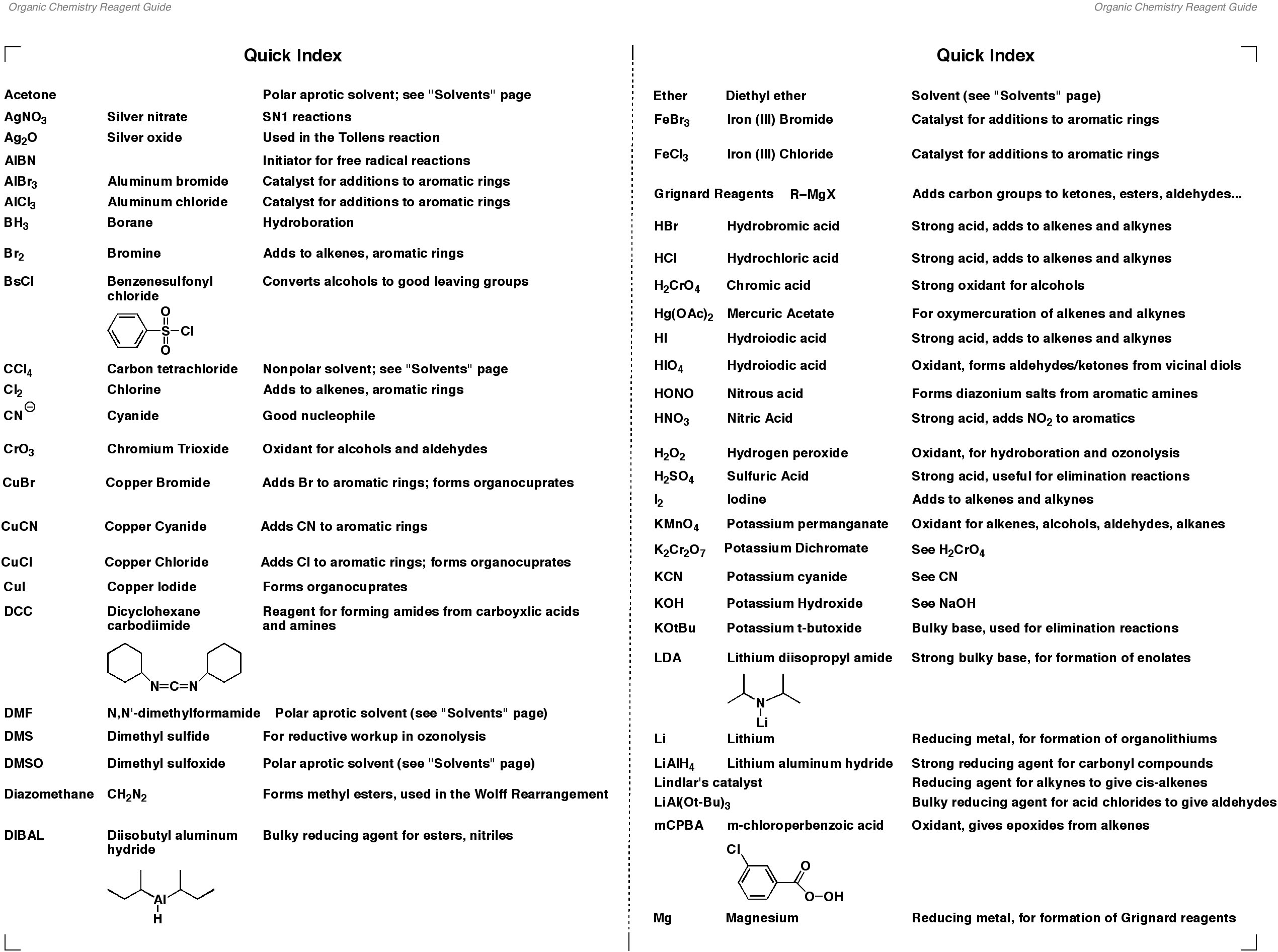
-a quick-reference index, with 2 pages of condensed information on every reagent covered in the book.

(Click here to download a PDF of the index)
- Accuracy is paramount for a document like this. I pay a bounty for typos and mistakes. If you buy the Guide, and tell me about any typos or mistakes you find – or have suggestions for things that have been omitted – I’ll send you a $5 reward through Paypal.
- You can use it risk free. If you are not completely satisfied that this is a useful guide for your course, I will give you a refund within 30 days of purchase.
UPDATE – version 2.0 released with even more reagents and spiffier graphics. Due to all the additional time spent to make the new version so polished, the regular price is now in effect.
On the page about DCC coupling, page 29, It shows the carboxylic acid attacking the DCC first, and then a proton transfer occurring afterwards between the =OH+ and the N- intermolecularly, even though they not realistically going to have a proton transfer. I found another source that showed the proton transfer occurring first between a nitrogen and the carboxylic acid intramolecularly, which seems a lot more feasible.
Here’s the Chemistry Steps version of the mechanism. It makes a lot more sense.
https://www.chemistrysteps.com/amides-from-carboxylic-acids-dcc-edc-coupling/
A very great reagent guide sir, but I am not able to afford it. Keep up the good work, you are already helping many students. I can’t ask for more, thanks a lot sir!
Hi!
The reagent guide is amazing!!!
One thing that I noticed that is a bit confusing is that on page 104 it says: “Due to carbon’s higher electronegativity relative to Cu, it bears a partial positive charge and is thus nucleophilic.”
A partial positive isn’t what makes the carbon nucleophilic…. it’s the partial negative on the carbon! That’s obviously associated with the partial positive on the Copper, but Copper isn’t the nucleophile here. Clearing that up would be super helpful. :)
Oh dear. You are right. Let me look into that typo and fix… Thank you Anna!
Thanks for the post it’s an awesome way to learn the reagents quickly!!!
There is a typo on page 41 on the explanation for example 7…
Purpose is spelled “purpsoe”!
Found Useful.Thanks!!!!
Is this only sold as a pdf file or can this be bought as a physical hand-held book?
It’s available as a physical book on Amazon
This and the summary sheets have been extremely useful!!! So invaluable thank you so much for creating this must have taken a lot of effort! Greatly appreciated
Is this a PDF file or a real hand-held book?
Interesting, but you might want have someone look over your files. I found some mistakes / confusion for example,
Structure of the isobutyl group is incorrect on the first pdf, which is actually of the secondary butyl.
Bs is not an abbr for the benznesulfonyl but the bromobenzenesulfonyl (abbreviating benzenesulfonyl as bOsyl just doesn’t make sense because there are no O’s between B and S)
fixed. Thanks for pointing this out.
Nice work! This will be very useful.
Just FYI, there is a typo on you DIBAL page (example 3: “initially” is missing the 2nd “i”
fixed! thanks.
I would color code the starting molecule, and then through cut/paste, the subsequent molecules would be color coded. But yes…. it was very time consuming. Looks nice though!
Congrats!
Did you go through and color code all the atoms by hand in ChemDraw? That’d take up 95% of the time for me! Or did you have some shortcut way to color code the atoms?